Are there sharks in the South West?
Sharks? In the UK?
Yes – our waters are home to plenty of the creatures, although sightings are rare.
Here’s everything you need to know about where and when you can spot them!
Are there Sharks in the UK?
It often surprises people to learn that the UK is home to dozens of shark species – and yes, some of them swim just off the coasts of Cornwall, Devon and Dorset!
Most are harmless, and they’re rarely seen by swimmers or beachgoers.
But they are there – and sometimes they’re spotted!
Shark attacks are extremely rare – there was one in Penzance in 2022, but that’s thought to be the first unprovoked shark attack in UK waters in 175 years.
What shark species are found off the South West coast?
There are around 30 species of shark living in or passing through British waters, and around 20 of those are regularly seen in the South West.
Most prefer deeper waters and are rarely visible from shore, but a few (especially in spring and summer) come closer to land.
Basking shark
The second-largest fish in the world, the basking shark can reach lengths of 10 metres or more. But despite its size, it’s a filter feeder. It’s harmless to humans and often spotted cruising slowly near the surface with its mouth wide open, filtering plankton!
The best time to see them is from May to August, especially off the Cornish coast near Mount’s Bay, the Lizard or the Isles of Scilly.
Blue shark
Sleek, fast and striking in colour, blue sharks live in deeper offshore waters but sometimes approach the coast in summer.
They’re rarely seen from land but may be spotted on boat trips, particularly off Cornwall.
This was the shark that bit a woman in Penzance in 2022, but they aren’t usually aggressive.
Porbeagle shark
A relative of the great white but much smaller and less aggressive, the porbeagle is found year-round in deeper UK waters. Anglers sometimes encounter them offshore.
They’re curious but rarely approach swimmers and tend to avoid boats.
Tope shark
Another species sometimes caught by sea anglers, the tope grows up to 2 metres and prefers shallow sandy areas, including around estuaries and bays.
Despite its size, it’s harmless to humans and plays a role in controlling smaller fish populations.
Small sharks: dogfish, catsharks, smooth-hounds
These are the sharks most likely to be encountered unknowingly by beachgoers — their egg cases (“mermaid’s purses”) regularly wash up along the South West coast.
These species stick to the seabed and rarely grow over 1 metre.
Occasional visitors
Sightings of thresher sharks (with their whip-like tails), shortfin makos, or even unconfirmed great white rumours pop up from time to time.
These are extremely rare and usually well offshore, if seen at all. There has never been a confirmed great white sighting in UK waters.
Where are sharks usually seen in the South West?
Most shark sightings in the South West happen in Cornwall, where deep waters come close to shore and nutrient-rich currents support large numbers of fish.
Wildlife safaris do sometimes see them – but of course, it’s never guaranteed.
If you want to see sharks, I only recommend trying to spot them from land or a wildlife tour. They’re generally safe, but unpredictable, so if you’re paddling or swimming and spot one, do not chase after them.
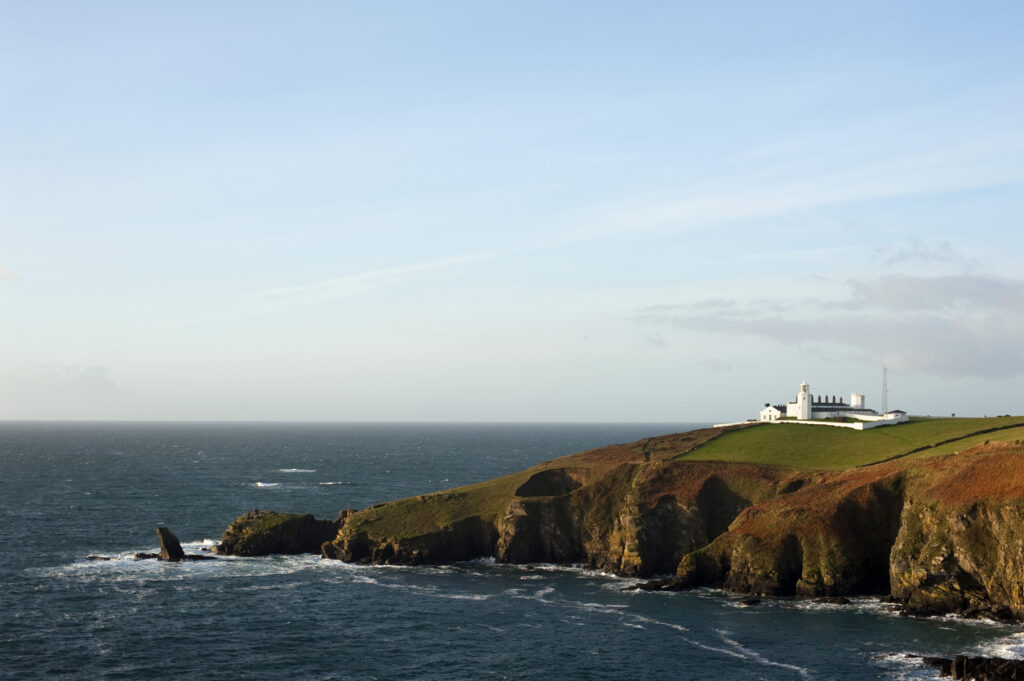
- Penzance and Mount’s Bay are sometimes home to basking sharks. Wildlife tour boats regularly depart from Penzance in summer.
- The Lizard Peninsula, with its rugged cliffs and deep offshore waters, is another possible location. From spots like Kynance Cove and Lizard Point, you may be able to see basking sharks – or at least pods of dolphins gliding through the waves in the warmer months!
- St Ives Bay, Sennen Cove, and the Isles of Scilly also see annual basking shark visits, especially in years with high plankton levels.
In Devon, sightings are rarer but not unheard of. Basking sharks have been seen off Start Point, Berry Head, and occasionally near Lundy Island.

Why are sharks important for our seas?
Sharks play a vital role in keeping marine ecosystems balanced and healthy.
Many species are apex predators, meaning they sit at the top of the food chain, helping to regulate populations of fish and maintain diversity in the seas.
Without sharks, ecosystems can become unbalanced, which can have knock-on effects on everything from plankton levels to commercial fish stocks.
The presence of sharks in the South West’s waters is a sign that the sea here remains productive and rich in biodiversity. But many of these species are under threat. Some are caught as bycatch by large fishing vessels.
Others are affected by warming seas, plastic pollution, or a reduction in food sources. The porbeagle, for example, is classified as vulnerable globally, and basking sharks are a protected species under UK law.
So, protecting sharks is incredibly important!
🦈 How to help protect sharks in Cornwall
- Report any shark sightings to the Shark Trust or Cornwall Wildlife Trust to support research and conservation efforts.
- Avoid buying or eating shark meat (I had NO idea that we sold shark meat in the UK, but apparently it’s often labelled as “rock salmon,” “huss,” or “flake” in fish and chip shops. Some of these meats are endangered).
- Pick up litter on beaches and reduce plastic use – marine waste can injure or kill sharks.
- Follow shark-safe behaviour when on the water – never approach, touch, or chase basking sharks.