The past, present and future of the Celts
Celtic. The word conjures up images of ancient symbols, misty landscapes and languages that sound unlike anything else in Europe. You might know Celts from the west of Britain – but that’s not where their story started.
The Celts weren’t a single people or empire. Instead, they were a network of tribal societies linked by language and culture, who once lived across much of the continent.
Over time, their influence was pushed to Europe’s Atlantic edge, where traces of that heritage remain strongest today.
Let’s look at the history of the Celts, and where you can find Celtic culture today.
Who were the Celts?

Image credit – By QuartierLatin1968, CC BY-SA 3.0, https://commons.wikimedia.org/w/index.php?curid=638312
The Celts were a collection of tribal societies linked by language, art and shared belief systems rather than a single ethnic group or empire.
They emerged during the European Iron Age, with the earliest recognisable Celtic culture traced back to the Hallstatt civilisation in modern-day Austria around 800 BCE. This culture was characterised by iron tools, salt mining wealth and distinct burial practices.
By around 450 BCE, a second cultural phase known as the La Tène culture spread across much of Western and Central Europe. Named after a lakeside site in Switzerland, La Tène artefacts show a distinctive swirling artistic style and finely crafted metalwork.
These finds appear from the Iberian Peninsula to the edges of Eastern Europe, suggesting extensive trade and cultural connections between Celtic-speaking groups.
What defines the Celts more than political unity is language. The Celtic language family split early into two main branches: Continental Celtic (now extinct) and Insular Celtic, which survives in modern languages like Irish, Welsh and Breton.
By the time of the Roman Empire’s rise, Celtic societies stretched from the Atlantic coast of Iberia to the fringes of the Carpathians. Yet they were already under pressure.
Germanic migrations from the east and the expanding Roman Republic from the south chipped away at their territories.
As Roman armies moved north and west, the Celts began a retreat towards the edges of Europe – where their descendants would eventually form the modern Celtic nations.
Over time, surviving Celtic communities were pushed to Europe’s Atlantic fringe: Ireland, western Britain, the Isle of Man and the north-western corner of Gaul. Cut off from each other by Roman provinces and shifting power dynamics, they began to develop distinct identities.
The Celtic nations
Today, the term Celtic nations refers to six regions where Celtic languages and cultural traditions have survived, at least in part, into the modern era.
These are: Ireland, Scotland, Wales, Cornwall, Isle of Man and Brittany.
Each has a distinct history, but they are united by linguistic roots, similar folklore, and a shared sense of being culturally distinct from the dominant states that surround them.
Ireland
Ireland was never fully absorbed into the Roman Empire.
As a result, its social and linguistic structures remained relatively intact into the early medieval period.
Old Irish developed into Irish Gaelic, which was once spoken across the entire island. Despite colonisation, suppression and a dramatic drop in fluent speakers during the 19th and 20th centuries, Irish remains a national language and is taught in schools.
Gaeltacht regions still exist where Irish is spoken in daily life.
Scotland

Celtic culture in Scotland is rooted in two traditions: the Gaelic-speaking culture of the Highlands and Islands, and the Brythonic heritage of the south.
Scottish Gaelic, a cousin of Irish, developed after Gaelic speakers from Ireland (the Scotti) settled in western Scotland during the early Middle Ages.
Today, the language survives mainly in the Hebrides and parts of the Highlands, though efforts are underway to promote its revival.
Meanwhile, Lowland Scots culture draws on different historical influences, including Norse, Anglo-Saxon, and Norman.
Wales

Wales has the highest percentage of native Celtic language speakers of any of the nations. Welsh (Cymraeg) is a direct descendant of the ancient Brittonic language once spoken across much of Britain.
The language survived largely thanks to strong literary and bardic traditions.
Today, Welsh is a co-official language in Wales and widely taught in schools. Road signs, official forms and even television broadcasts use both English and Welsh.
Cornwall
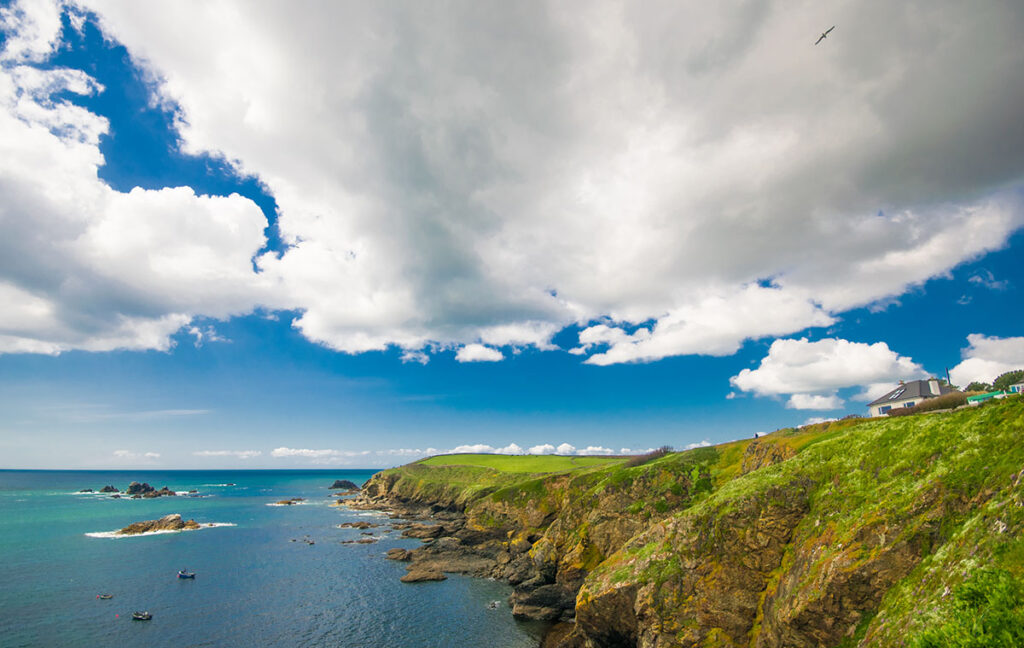
Cornish, a Brythonic language closely related to Welsh and Breton, died out as a native tongue in the late 18th century but has since been revived. Though still endangered, it is once again spoken in homes, taught in some schools, and used for signage in parts of Cornwall.
Culturally, Cornwall retains strong Celtic features in its festivals, folklore, and place names – and some residents identify as Cornish rather than English.
Cornish people were also legally granted minority status in 2014.
Isle of Man
Manx Gaelic, once nearly extinct, is experiencing a small revival.
Like Irish and Scottish Gaelic, it belongs to the Goidelic branch of Celtic languages.
While the last native speaker died in the 1970s, recorded materials, community education and government support have brought the language back into use.
Cultural traditions such as Manx music, folklore, and seasonal festivals remain central to island identity.
Brittany

Brittany’s Celtic identity is somewhat different. Its language, Breton, arrived from Britain during the early medieval migrations of Brittonic speakers fleeing Anglo-Saxon invasions.
Breton is linguistically closest to Cornish and Welsh. Despite France’s historical policies of linguistic centralisation, Breton remains spoken in parts of western Brittany. The region is also known for its strong musical and folkloric traditions, many of which trace back to its Celtic past.
Other Celtic regions
In addition to the six core nations, there are culturally Celtic regions such as Galicia and Asturias in north-west Spain.
These areas retain Celtic influences in their folk music, festivals, and mythology, but lack a surviving Celtic language.
Some also point to Nova Scotia and Cape Breton in Canada, where Scottish Gaelic was widely spoken among immigrants for generations.
Pan-Celtic solidarity movements, including the Celtic League and Festival Interceltique de Lorient, continue to emphasise the commonalities between these nations.
While their languages and political realities differ, each nation maintains elements of a shared Celtic inheritance — one that continues to evolve rather than remain frozen in the past.
How Celtic nations got assimilated into other countries
Each of the six Celtic nations was eventually absorbed – through conquest, union, or centralisation – into larger political entities. These processes often involved deliberate attempts to suppress local languages and cultures in favour of a unified national identity.
While the specifics vary between regions, the underlying pattern is consistent: Celtic-speaking peoples were gradually marginalised, their institutions dismantled, and their traditions either diluted or actively repressed.
- Ireland: English control began in the 12th century and intensified under the Tudors, with laws suppressing Gaelic customs and language; centuries of colonisation led to the Irish language’s decline and full political union with Britain by 1801.
- Scotland: Although Scotland remained independent until 1707, Gaelic culture was targeted earlier through laws like the Statutes of Iona and post-Jacobite measures that banned language, dress, and clan structures.
- Wales: Annexed by England in the 16th century, Wales saw the Welsh language banned from public life and actively suppressed in schools, particularly during the 19th-century “Welsh Not” era.
- Cornwall: Integrated into England during the late medieval period, Cornwall lost much of its linguistic identity after the 1549 Prayer Book Rebellion, which led to harsh crackdowns on Cornish language use.
- Isle of Man: Became a Crown possession in 1765; English replaced Manx Gaelic in public life during the 19th century, and the language fell into near-extinction by the 20th.
- Brittany: Annexed by France in the 16th century, Breton identity was heavily repressed during and after the French Revolution, with Breton banned from schools and stigmatised as anti-republican.

How Celtic nations are holding onto their identity
Despite centuries of suppression, the Celtic nations have held onto their identities through local efforts, community activism, and cultural revival. While the strategies vary, there’s a shared belief that language, tradition, and heritage still matter — and that assimilation didn’t erase everything.
Language revival is central. Welsh has official status and is used in education and media, including the S4C channel. In Scotland, Gaelic is taught in some schools and broadcast on BBC Alba. Irish is widely taught and present in public life, particularly in Gaeltacht areas. Cornish and Manx, once considered extinct, have seen small-scale revivals, with children now speaking Manx as a first language in some households.
Ireland’s the only independent Celtic nation (apart from Northern Ireland), and this has meant that Irish identity has endured in countless ways – through music, language, sport, and even everyday rituals. From GAA matches to watching the Irish Lottery draw, small acts continue to anchor a shared cultural experience, whether you’re in Galway or part of the diaspora in New York.
Breton remains under pressure in France, but Diwan schools and popular Breton music keep it alive. Cultural festivals like Lorient’s Festival Interceltique bring together all six nations, offering visibility and solidarity across borders.
Traditional festivals, music, and folklore also continue. Wales’ Eisteddfodau, Cornwall’s Obby Oss Day, and Irish seasonal customs like Samhain and Imbolc are celebrated both locally and internationally. Political movements (from Plaid Cymru to the SNP) have linked cultural revival to autonomy campaigns. Cornwall was officially recognised as a national minority in 2014, and the Isle of Man maintains its own parliament.
Diaspora communities worldwide keep Celtic identity alive through music, language, genealogy, and heritage centres. And younger generations are picking it up online, through TikTok, YouTube, and language apps.