Best winter walks on the South West Coast Path
Winter walking on the South West Coast Path?
It might sound a little crazy, but trust me, it can be worth it!
I love a satisfying winter coast path hike. I get out and about for the day, breathe some fresh air and there are far, far fewer people on the paths this time of year!
So, here’s my guide to the best South West Coast Path sections for the cooler months.
A few considerations
Bear these in mind when arranging your South West Coast Path hikes!
- Daylight hours will be much shorter, especially in November, December and January. Bearing that in mind, this is not the time of year to do the Hartland Quay to Bude hike!
- Many paths on the SWCP will be muddy after rain. That doesn’t mean they’re automatically a no-go, but do dress appropriately and have a contingency plan in case you need to turn back.
- Personally, I like to end my winter walks with a pub stop to get some hearty food! So for this, hiking between towns and reasonably-sized villages is ideal.
- If you want to organise a longer trip, I’d recommend contacting a company like Mickledore.
The walks below are all 2–3 hours long, so they’re ideal to do in the morning or around lunchtime.
Looe to Polperro
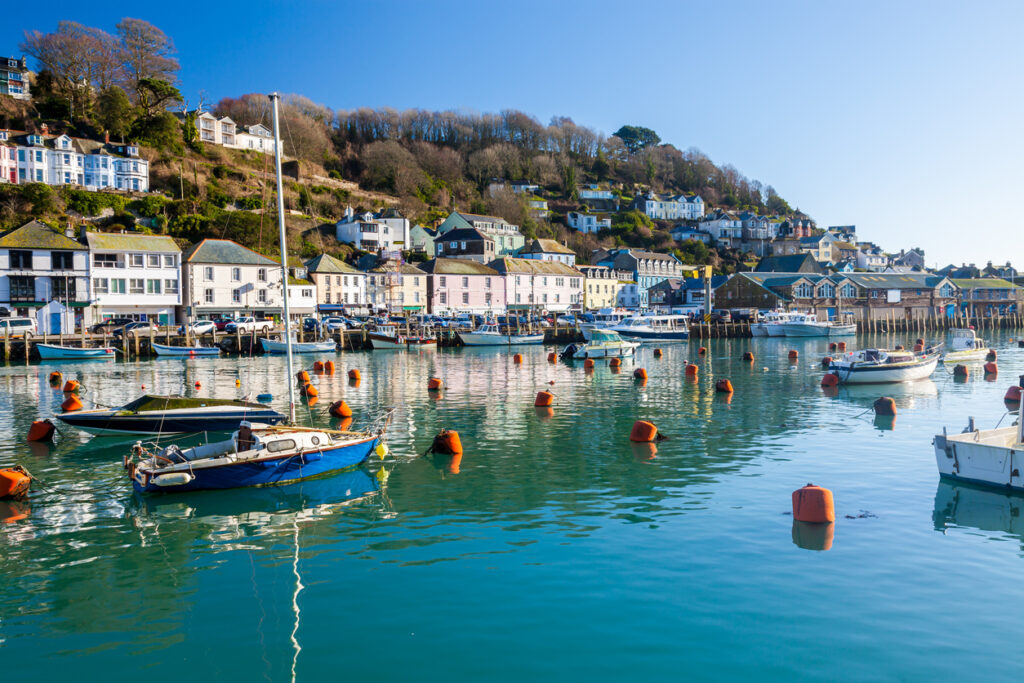
This is my favourite winter South West Coast Path hike!
This stretch works well in winter as you follow the route out of West Looe and climb steadily onto a broad cliff line.
The path stays on compact ground for long sections, and although there are short rises and dips, none feel overwhelming.
You move between pockets of woodland and open cliff, with views of tall slate headlands and fishing boats running along the coast.
The final approach into Polperro drops you straight into the gorgeous narrow streets lined with old cottages. I highly recommend heading to Blue Peter Inn, where you can enjoy a hearty pub lunch.
You can return by bus (so you don’t need to worry about spending too long in the pub!). The bus stop is just above Polperro village and leads to central Looe.
Ladram Bay to Sidmouth (out-and-back)

This hike is actually ideal in the winter, as you can’t start from the same place in the summer months!
Drive to Ladram Bay Caravan Park and park there. This beach is off-limits to non-guests in the summer months, but in the winter the public have access.
The initial climb is short and steady, and the high ground between Ladram and Sidmouth drains well compared with nearby wooded valleys.
You stay on a chalk-capped ridge for much of the distance, with open views towards the red cliffs that frame the coastline. There’s a point where you can go up a short train to High Peak, the highest point on this stretch of coastline, where you’ll catch views of Sidmouth one way and Ladram the other.

The buses aren’t great in this area, so I would recommend doing this as an out and back hike.
From Sidmouth, take some time to explore the town, then head back the same way.
If you want a slightly longer hike, you could also park in Otterton and take permissable paths to Ladram Bay!
Exmouth to Budleigh Salterton
To take this hike, from Exmouth follow the paved seafront before joining a compacted cliff path that cuts across the red sandstone. It’s one of the firmest sections in East Devon, although it can still get quite boggy after heavy rainfall!

I’d recommend proper hiking boots for this one – I love my Salomons!
You climb only briefly before reaching a long, levelled stretch high above the beach. This gives you wide views of the Jurassic Coast.
Ultiamtely, you’ll drop into Budleigh Salterton and can either amble along the River Otter or just stick to the town.

You can return by bus, or you can walk or cycle back along the levelled, surfaced route of the old railway line if you prefer not to re-trace the cliff path.
See my full guide to this hike here.
Falmouth to Mawnan Smith (via Maenporth)
This is one of the most reliable winter half-day routes in Cornwall because much of the path sits on compacted tracks that cope well with heavy rain.
Start at Gyllyngvase Beach and head south past Swanpool, with a steady climb giving you wide views across Falmouth Bay. The route is open and well-maintained, and you reach Maenporth by following a mix of clifftop grassland and straightforward downhill sections.
Beyond Maenporth, the path rises again towards the wooded approaches to Mawnan Smith.
You move past quiet coves and sheltered slopes before reaching the lanes that lead directly to the village centre.
Buses run back to Falmouth from the village.
Coverack to The Lizard
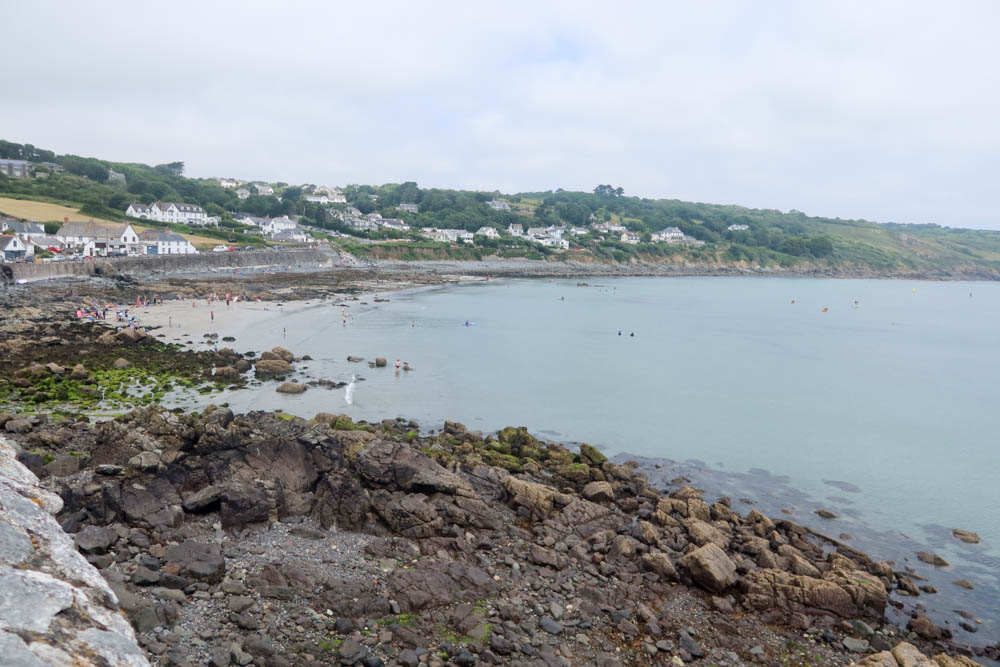
Here, you’ll spend most of the route walking over serpentine and granite, which drain more cleanly than the slate and clay sections further west!
Leaving Coverack, you climb gradually above the harbour and follow a broad, open headland towards remote coves and rounded cliffs. The path stays clear underfoot, and although you encounter occasional slopes, none of them turn into difficult scrambles after rain.
You approach the Lizard peninsula with steady views across exposed headlands, but the walking itself remains controlled and direct. The final section into Lizard village takes you along well-maintained tracks, giving you a simple end point with pubs and cafés that stay active through winter.
If you prefer an easier finish, starting in Lizard and walking east towards Coverack keeps the hardest climbs early and the gentlest terrain at the end.
Perranporth to St Agnes
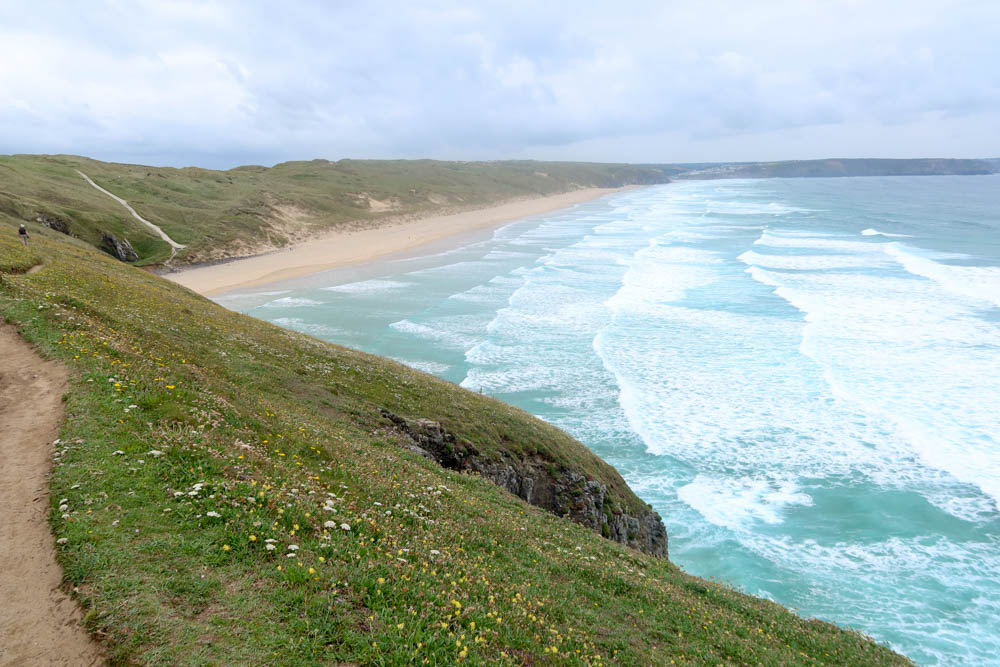
This is one of Cornwall’s most visually rewarding winter walks, and the terrain is far easier than the rugged scenery suggests!
You’ll leave Perranporth on a stable sandy track that climbs gently onto the clifftops. Once you gain height, the ground becomes firm turf mixed with compacted paths shaped by mining activity – this is part of the Cornish Mining World Heritage Site.
Because you stay on exposed cliff for most of the way, water drains quickly, which reduces the mud you’d normally encounter on inland routes.
As you move towards St Agnes, you pass a line of preserved engine houses and reach wide viewpoints over the Atlantic. The gradient remains steady, and the route avoids the harsh, steep valleys that characterise other parts of the north Cornwall coast. Approaching St Agnes, you descend on a predictable, well-established path that drops you into Trevaunance Cove.
Ending in St Agnes works well in winter thanks to year-round pubs and sheltered spots near the beach.
You can pick up the bus back to Perranporth or stay on for an extra hour to enjoy the village. It’s beautiful with no tourists!
Polzeath to Rock
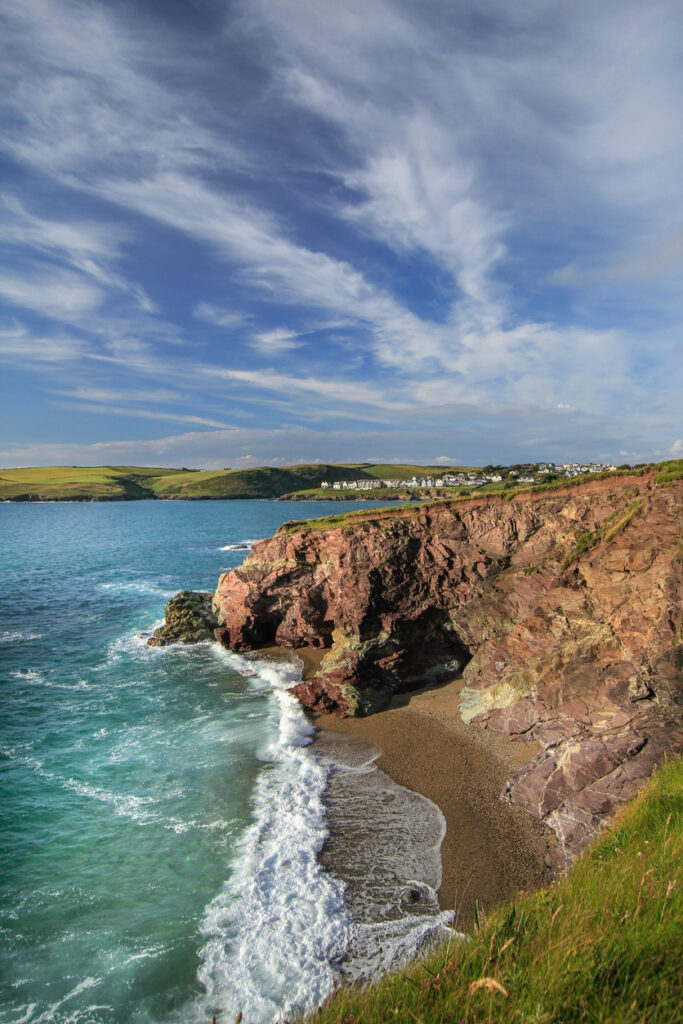
This is an easy walk focusing more on the Camel Estuary than the coast itself. Just head down from Polzeath, take the river trail past Daymer Bay and amble towards Rock.
It’s a pretty flat trail, and you can quite easily do it as an out and back.
Rock has a few places to eat, including Paul Ainsworth’s Mariners Pub!
Take a look at my full walking guide here.
Ilfracombe to Woolacombe

The Ilfracombe to Woolacombe walk is one of the easiest in North Devon that still hugs the coast (although don’t let that fool you – it’s no Annapurna Circuit Trek, but it’s still one of the most difficult on this list!).
The views as you clamber out of Ilfracombe are magnificent; if you catch it on a crisp winter’s day, the sea shines aquamarine and the rocks look like they could be in Thailand!
You’ll pass through Lee Beach, which is silent out of season, and by Bull Point Lighthouse, before rounding the jagged Morte Point.
There are lots of restaurants and pubs in Woolacombe to end your hike. I like Bar Electric. Or, head up to Mortehoe for a pub lunch at either the Chichester Arms or the Ship Aground.
You can take a bus between Ilfracombe and Woolacombe – or they’re both connected to Barnstaple Railway Station, which links to Exeter St Davids.
See my full walking guide here.
Rame Head to Cawsand and Kingsand
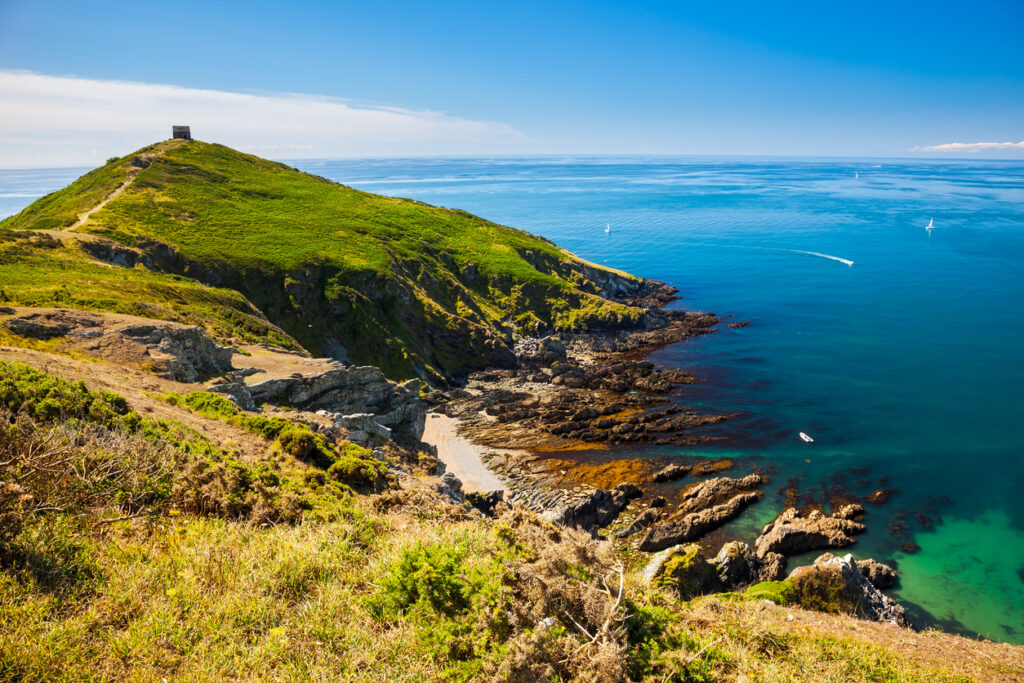
This is an out-and-back route along the southeastern Cornish coast. The Rame Peninsula is known as “Forgotten Cornwall”, although that’s a misnomer these days – it can be very busy in summer!
In winter, though, it’s still incredibly quiet and peaceful. We hiked this route in January a few years ago, and loved how calm it was.
From Rame Head, it’s about three miles to Cawsand and Kingsand. Here, you can stop for a bite to eat (we’ve dined at The Bay Bar and Restaurant before and enjoyed it!).