8 Best Walks In Cornwall in Spring
Spring could well be the best time for a Cornish walk.
The winter storms have (mostly) dissipated, wildflowers bloom along clifftops, and there’s a brief window of opportunity to explore coastal hotspots before the summer crowds descend en masse.
With the weather warming, Cornwall’s estuaries are packed with birdlife. Longer days mean more time to hike longer sections of the South West Coast Path, where cold pints and perhaps – if you’re brave enough – a sea swim, await you at the end of the walk.
From quaint strolls along the Bude Canal to bracing hikes around Cape Cornwall, here are the best walks in Cornwall in Spring.
Best Spring Cornwall walks
1. St Michael’s Mount and Marazion
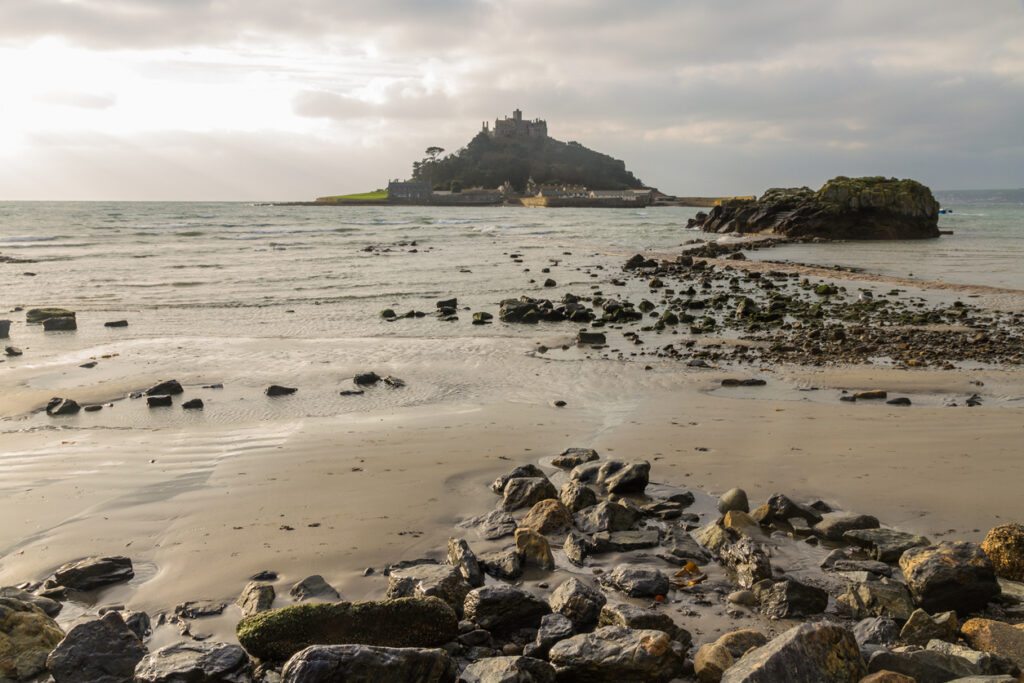
Few sights in Cornwall are as dramatic as St Michael’s Mount, a tidal island topped by a castle on the Duchy’s far western shores.
Spring is the ideal season to visit, when the stone causeway connecting this ancient isle to the mainland is less crowded, and when nearby Marazion Marsh is abuzz with birdlife.
You’ll need to check the tide times before you begin this walk, because at high tide, the causeway is completely submerged.
Start your walk in Marazion, walk across to St Michael’s Mount at low tide, then cross back and loop along the coast to Marazion Marsh, an RSPB nature reserve where you’ll spot little egrets, waders and sandpipers.
This relatively short walk covers around three miles or so, but you’ll have plenty of history to explore on St Michael’s Mount and birdwatch back in Marazion!
2. Bude Canal
For a gentle spring stroll, we recommend visiting Bude, where you can explore a lesser-known side of Cornwall’s post-industrial landscapes.
Opened in 1823, the Bude Canal was an ambitious work of Victorian engineering intended to eventually connect the Bristol Channel to the English Channel via the River Tamar.
The grand plan never really worked out, but although the canal closed in the late 19th century, its towpaths now offer wonderful walking in Northern Cornwall!
This route starts at Bude Sea Lock, then follows the canal inland along level towpaths. There’s plenty of Victorian history to uncover here, while in the adjacent wetlands, you might see herons, swans and warblers.
Cross over the Bude Canal when you arrive at County Road, and you can walk down to Upton. From here, you can join the South West Coast Path for a seaside stroll back to Bude. In total, you can expect to hike around four miles along the canal and coast.
3. St Just to Cape Cornwall
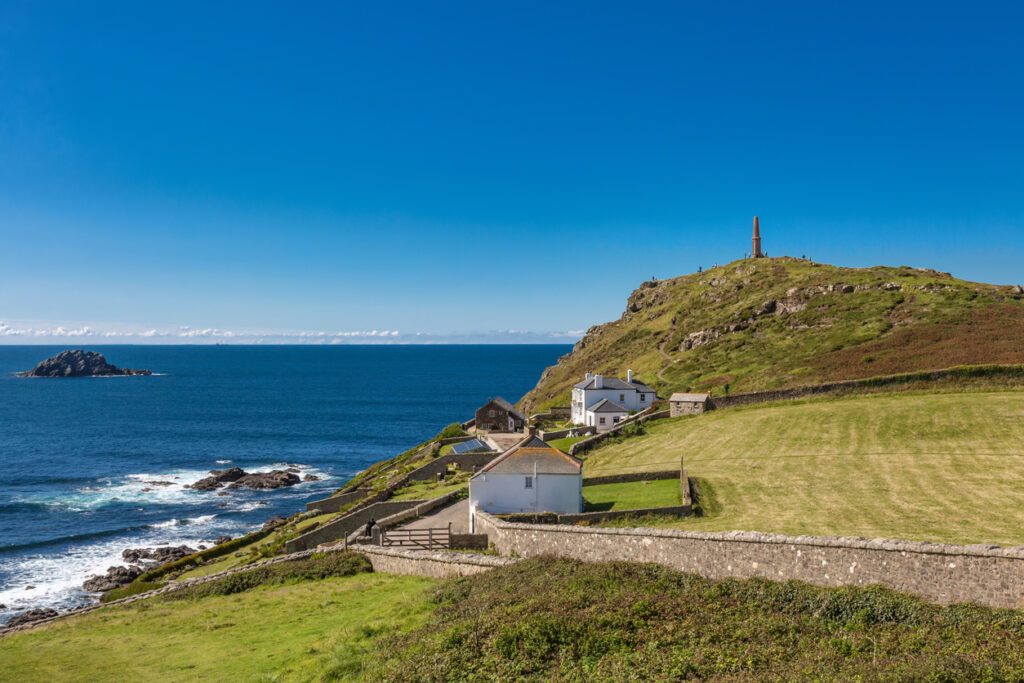
Experience the wild western edge of Cornwall with a short but often bracing walk from St Just to Cape Cornwall. This 1-mile-long walk takes you downhill from St Just to the South West Coast Path, where wildflowers are sprayed with sea salt from the ferocious Atlantic Ocean.
Cape Cornwall, where a lighthouse stands guard over one of Cornwall’s most westerly headlands, is sheer drama. You’ll hike to the very edge of Cornwall, where the land narrows into the ocean, and offshore stacks rise above the Atlantic.
There’s much mining history to be uncovered, too, because Cape Cornwall is part of the UNESCO World Heritage-listed Cornwall and West Devon Mining Landscape.
Head back to St Just the same way you arrived, and you can call in at the historic Star Inn for a cold pint of Korev.
Alternatively, extend the walk by continuing north or south along the South West Coast Path.
4. Tintagel to Boscastle
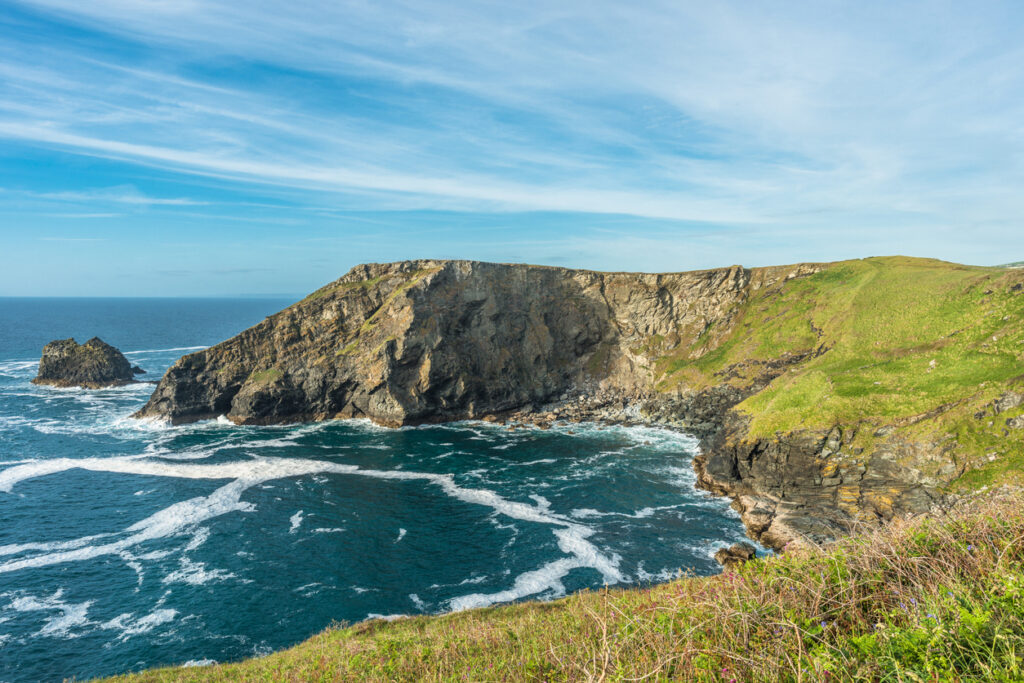
Perched on a rocky outcrop above the Bristol Channel, Tintagel Castle is as dramatic as it is legendary. Long associated with Arthurian legends, your hike starts in the shadow of this beloved coastal castle.
From Tintagel Castle, you’ll hike five miles northeast to Boscastle, an equally dramatic harbour hidden away in a sheltered inlet. The route follows the South West Coast Path, across exposed headlands and with sweeping views of sea stacks and rocky beaches.
You’ll soon see why in summer, the path is often overcrowded with tourists!
In spring, you should have many sections between Tintagel and Boscastle to yourself.
5. St Agnes Head and Wheal Cotes
You can dig a little deeper into Cornwall’s mining heritage by tackling a 3-4 mile circular walk around St Agnes. This hike starts from St Agnes Beacon, a Bronze Age barrow outside its namesake village, offering sweeping views of the coastline.
From Agnes Beacon, head downhill towards Wheal Cotes, one of the most photographed engine house sites in Cornwall. These ruins are also part of the UNESCO World Heritage-listed Cornwall and West Devon Mining Landscape, and dotted around, you’ll find old mine shafts and the crumbling remnants of chimney stacks.
You can continue down to Chapel Port Beach (it’s a steep slog up and back, though!), before following the South West Coast Path north to St Agnes Head.
Enjoy the spring landscapes, then loop inland to St Agnes Beacon to finish your circular walk.
6. Padstow to Stepper Point
Padstow’s celebrity chef-run restaurants ensure that in summer, the crowds are inescapable.
Spring is different, and it’s the best time of year to visit. On a sunny spring morning, we love hiking the 6-mile circular walk from Padstow to Stepper Point, an exposed headland overlooking the Camel Estuary.
First, you’ll walk through Padstow’s working harbour, before following the estuary to Stepper Point. From this spectacular vantage point, you’ll have glorious views of the Doombar.
Not the Cornish beer (although you can have a pint of that later), but the treacherous sandbank that’s caused many a ship to wreck on its way into Padstow.
From Stepper Point, continue on the South West Coast Path to Butterhole Beach, then loop back via inland paths to Padstow. Once you’re back in town, take your pick of Padstow’s best restaurants.
7. Golitha Falls
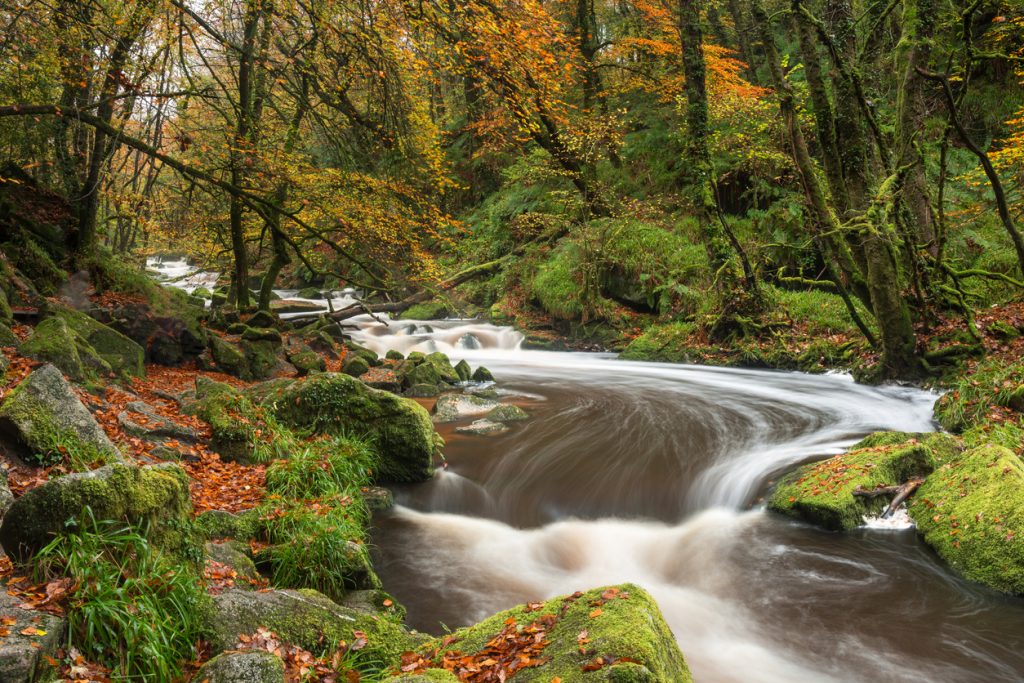
In spring, the River Fowey flows fast off Bodmin Moor. Head to the vast Lanhydrock Estate, and you can see Golitha Falls at their best.
Start at the main car park at Golitha Falls (Draynes Bridge), where well-marked paths lead directly into a woodland nature reserve on the banks of the River Fowey.
Circular walking trails offer views of crashing cascades as the river flows over boulders, while mosses and ferns thrive in the damp conditions, giving the landscape a dense, green appearance.
Just a short distance from the car park, you’ll then find Inkies Smokehouse, a small, family-run smokehouse and café that’s become a popular stop for walkers. It’s a delightfully unexpected place to end your trip to Golitha Falls.
See my full guide to Golitha Falls here.
8. Frenchman’s Creek
This circular walk explores one of Cornwall’s most secluded estuarine landscapes, following wooded paths above the Helford River before dropping into the narrow inlet of Frenchman’s Creek. Starting and ending in Helford, the route covers around 2.5–3 miles.
It’s a relatively easy walk, following woodland tracks, farmland paths, and quiet lanes, with only short ascents and descents.
From Helford, the route climbs gently for views across the river, before looping through fields and descending into Frenchman’s Creek itself, a narrow, tree-lined inlet that inspired the work of Daphne du Maurier.
Spring is when this landscape feels most distinct. Woodland paths fill with early flowers, and the creek attracts birdlife such as herons and curlews along its sheltered edges. It’s a rather peaceful contrast to Cornwall’s often blustery coastal hikes!