7 easiest places to visit in Devon without a car
Want to visit Devon, but don’t have a car?
It’s not as tough as you might think!
There are plenty of towns, cities and even villages in Devon that you can reach by rail, and bus networks can connect you with smaller places.
A no-car trip will look a bit different – you’ll have to be organised with timetables and you won’t be able to make it everywhere, but you can see a lot in Devon without driving.
Here are the best places to visit in Devon by train and bus!
Exeter
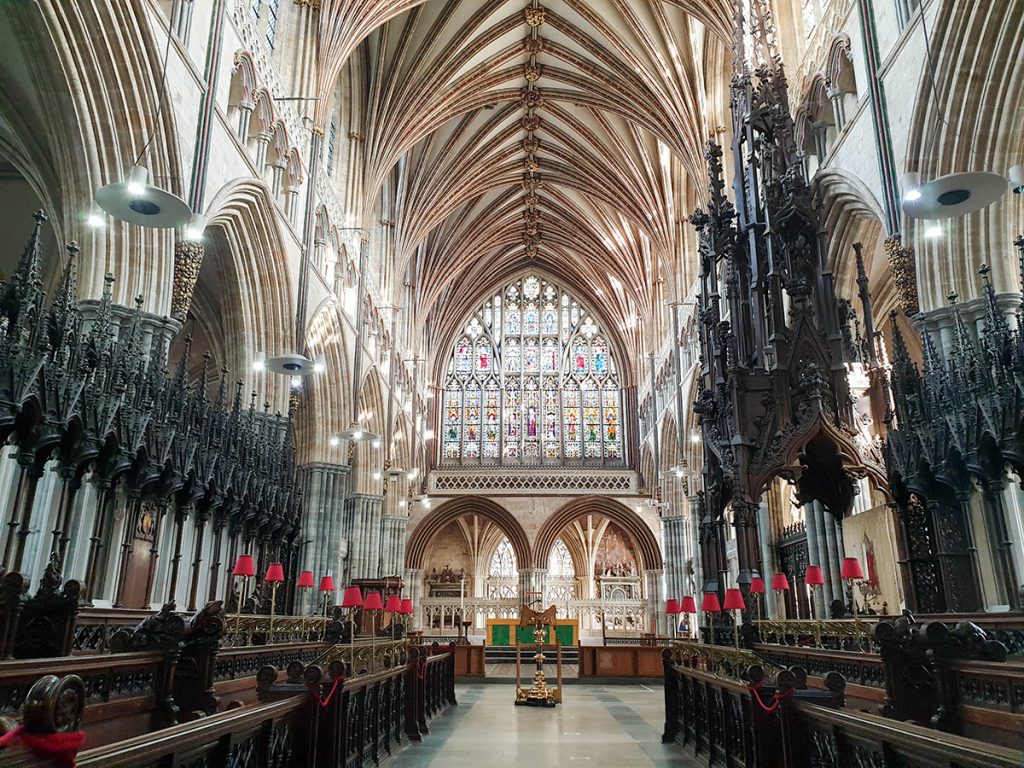
Exeter is the best-connected city in Devon and an ideal base if you’re travelling without a car. Direct trains run from London Paddington in just over two hours, and there are also services from Waterloo, Bristol, Birmingham and the north of England.
With a compact city centre, it’s easy to get around on foot. The Gothic cathedral dominates the centre, and just a short stroll away you can visit the Royal Albert Memorial Museum, explore Exeter’s underground passages, or walk down to the historic quay for cafes and riverside paths.
Check out the best things to do in Exeter here.
From Exeter St Davids or Exeter Central, you can access several branch lines that open up the wider county:
- The Avocet Line runs half-hourly to Exmouth, following the River Exe and connecting with the Exe Estuary Trail for cycling and walking.
- The Riviera Line travels south to Paignton via Dawlish and Torquay, passing some of the most scenic coastal railway in Britain.
- The Tarka Line winds north through mid-Devon countryside to Barnstaple, while the Dartmoor Line takes you west to Okehampton and the edge of Dartmoor National Park.
Buses from Exeter’s main station and bus station link with Dartmoor villages, Sidmouth on the Jurassic Coast, and Tiverton to the north – although some of these can be infrequent, so check timetables before you travel!
Here are the best day trips from Exeter.
Exmouth

Exmouth is one of the easiest coastal towns in Devon to reach without a car, with direct trains from Exeter taking just 30 minutes on the Avocet Line.
Services run every half hour and follow the River Exe, giving you glorious estuary views. I live in Exmouth, and have to shake myself sometimes when I realise this is my commute!
When you arrive in Exmouth, you’ll find a wide seafront with two miles of sandy beach, dotted with cafes and ice cream kiosks.
At the western end is Orcombe Point and the Geoneedle, which is the official start of the Jurassic Coast World Heritage Site.
From here, you can set out on the South West Coast Path towards Budleigh Salterton, or follow the Exe Estuary Trail north on a flat walking and cycling route that eventually connects with Topsham and Exeter.
See more things to do in Exmouth here.
If you’re looking to travel further, seasonal ferries cross the estuary to Starcross and Topsham, and local buses run to Budleigh Salterton, Sidmouth and Exeter.
Totnes
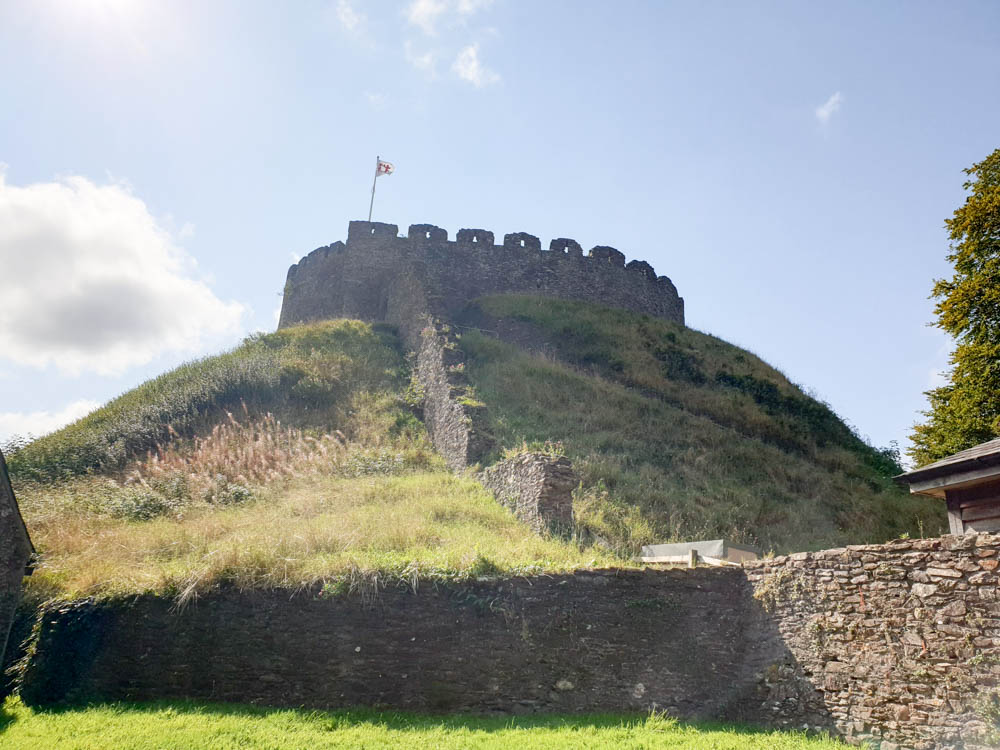
Totnes sits on the main line between Exeter and Plymouth, so you can reach it directly by train from either city. It also has direct trains to London, Birmingham and the north.
From the station, it’s a ten-minute walk downhill into the town centre, where narrow streets pass independent shops, cafes and historic buildings.
The Norman castle overlooks the rooftops, and the River Dart runs along the edge of town, with flat paths beside the water.
See the best things to do in Totnes here.
Totnes makes a good base if you want to reach both the South Hams and Dartmoor without driving.
Local buses connect Totnes with Dartington, Ashburton and Buckfastleigh, and with villages on the edge of Dartmoor.
You can also take the bus south to Kingsbridge or Dartmouth – although these routes can be slow compared to car journeys.
The River Dart can also be used as a transport link!
From the quayside, passenger boats run to Dartmouth in the summer months, which is well worth a visit!
Torbay

The Riviera Line runs south from Exeter and follows the coast through Dawlish before reaching Torquay and Paignton, the two largest towns in Torbay.
The train journey itself is part of the experience, with sections of track running almost at sea level! Once you arrive in Torbay, you’ll have beaches, promenades and seaside attractions all within walking distance of the stations.
Torquay’s home to Torre Abbey, a harbour full of boats, Kent’s Cavern Caves and a stretch of cafes and restaurants along the waterfront.
Paignton, a few minutes further along the line, has a Victorian pier, a wide sandy beach and family attractions including the zoo. Both towns are linked by regular buses and the rauilway, so you can stay in one and easily explore the other.
I don’t personally love the town centre of either Torquay or Paignton – they could both use a facelift – but the coastline is beautiful and there are plenty of attractions in each.
Torbay also has a range of onward routes if you want to see more of South Devon.
From Paignton, the Dartmouth Steam Railway runs along the coast to Kingswear, where ferries cross the river to Dartmouth (you can then take a boat up the River Dart and a bus from Totnes back to Paington!).
The Western Lady Ferry connects Torquay and Brixham.
Plymouth
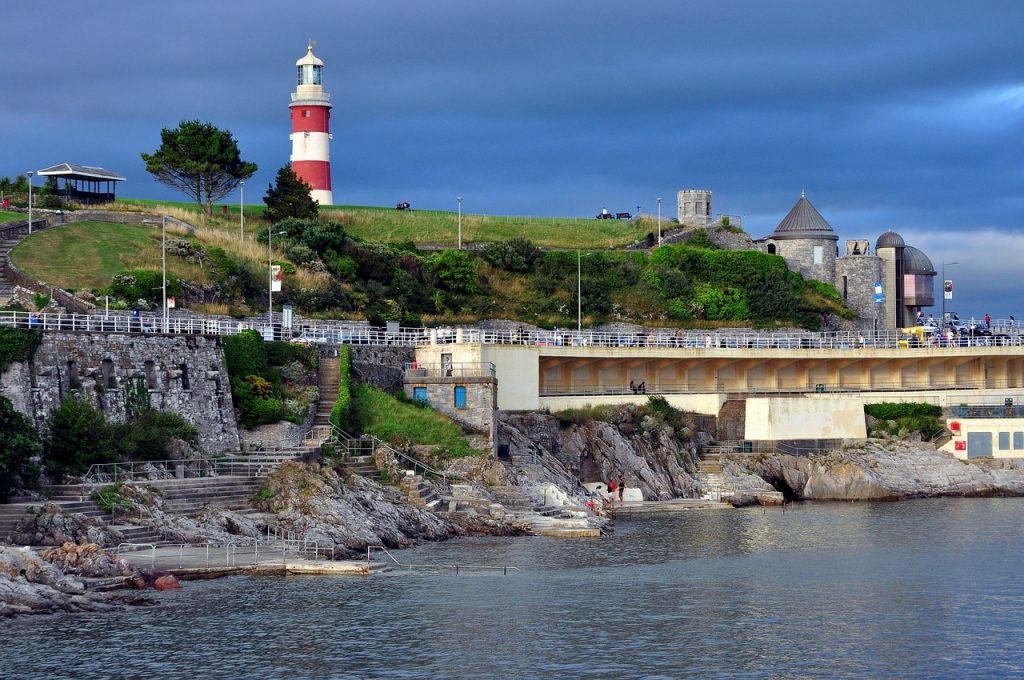
Plymouth is Devon’s largest city and a major transport hub, with direct trains from London Paddington in just over three hours and CrossCountry services linking it to Birmingham, Bristol and the north of England.
If you’re arriving by coach, National Express and Megabus both stop in the city centre. Once here, most of the main sights are walkable, and local buses cover the wider area.
The Hoe is the best-known landmark, a clifftop green overlooking Plymouth Sound, with Smeaton’s Tower lighthouse standing at its centre. Below, the Barbican has narrow streets, old pubs and the Mayflower Steps, where the Pilgrim Fathers departed for America.
The National Marine Aquarium sits nearby, and ferries leave from the same waterfront for short trips across the harbour.
See my full Plymouth travel guide here.
One of Plymouth’s advantages is the range of onward journeys available without needing a car. Ferries cross the Tamar to Cornwall – Cawsand, Cremyll and Torpoint are all easy day trips.
Bus routes also link the city with Dartmoor National Park, although some services are seasonal or less frequent.
Okehampton
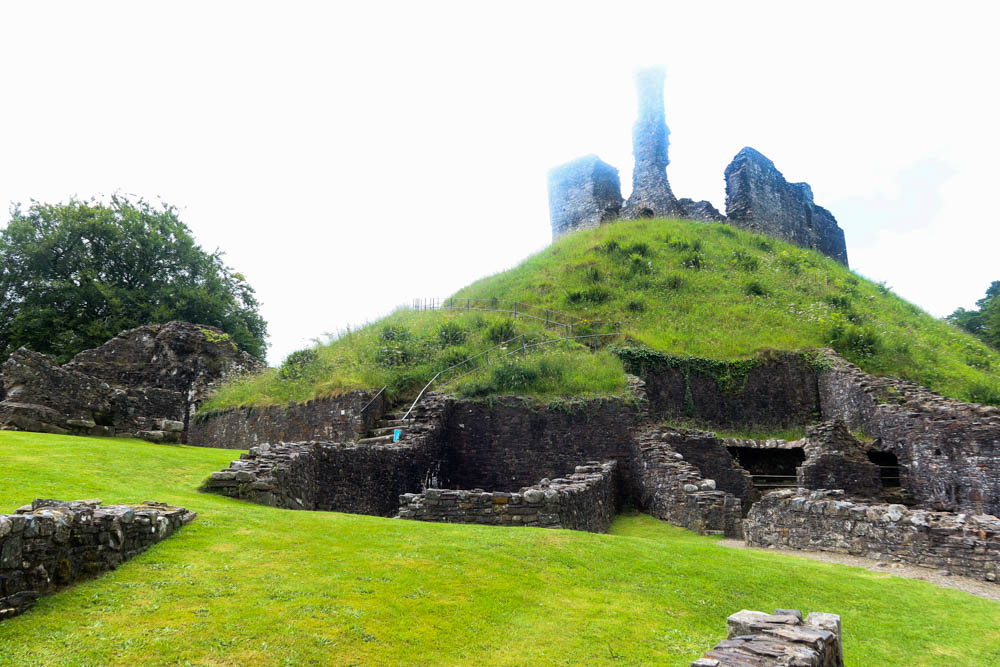
Okehampton sits on the edge of Dartmoor and has been reconnected to the rail network in recent years, with the Dartmoor Line running hourly from Exeter St Davids.
The journey takes about 40 minutes, and from the station it’s a 15-minute walk downhill into the town centre. Okehampton’s main draw is direct on-foot access to some of Devon’s best walking country.
In town you’ll find the Museum of Dartmoor Life, Okehampton Castle (although this is currently closed apart from pre-organised appointments) and a small selection of shops, pubs and cafes. The real draw, though, is the countryside around it.
From the station you can reach the Granite Way, a traffic-free cycle and walking trail that runs to Lydford, with views of viaducts and moorland.
Dartmoor itself is on the doorstep, with walking routes leading to Yes Tor and High Willhays, the highest points in southern England.
Buses connect Okehampton with Tavistock, Bude and other Dartmoor villages. Services aren’t as frequent as those in the larger towns, but if you plan your journeys around the timetables, you can explore wide stretches of the moor without a car.
Barnstaple
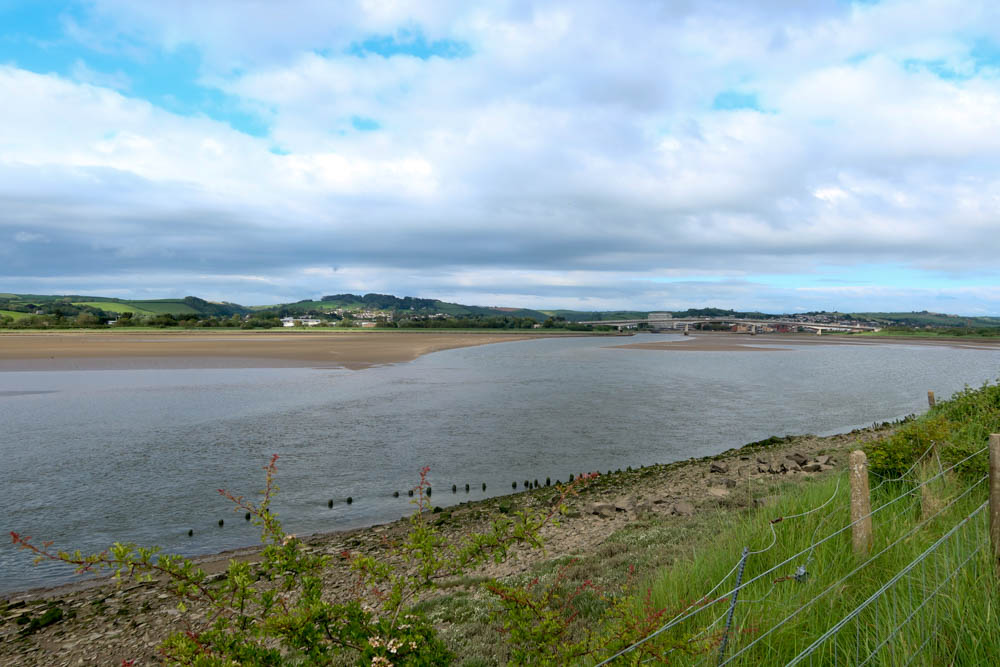
Barnstaple is the main town in North Devon and the terminus of the Tarka Line, a scenic rail route that runs from Exeter through rolling countryside.
The train journey takes about 75 minutes, and from the station it’s a short walk across the bridge into the town centre.
The town itself has a pannier market, a small museum and riverside walks, but many visitors use Barnstaple as a base to reach the coast.
From the bus station, services fan out across North Devon. But, one word of caution: these can be very irregular, so make sure you check timetables before starting any journey!
You can reach beaches such as Saunton Sands, Croyde and Woolacombe, all popular with surfers, or head to Ilfracombe for a gorgeous harbour.
The 309/310 route runs east to Lynton and Lynmouth, where the cliff railway links the two towns and the South West Coast Path climbs onto Exmoor.
Barnstaple also connects with the Tarka Trail, a flat cycling and walking path along a disused railway line.
You can hire bikes locally and the route offers estuary views and easy access to smaller villages.
See my full list of things to do in Barnstaple here.
It’s not too tough to travel around Devon by public transport! Don’t forget to follow me on Facebook for lots more Devon travel tips.