Best Bridgerton filming locations in Bath
I lived in Bath years before Bridgerton graced our screens, but when it finally did, it was no surprise to me that the city often stood in for Regency-era London.
While the series takes place largely in the capital, much of modern London has changed considerably since the early 19th century – but as Bath has retained entire streets of honey-coloured Georgian buildings, production teams decided that this city should be the destination of choice for much of the series’ filming!
They’re all within walking distance of each other, and you can see them all in a day.
So, here are the best Bridgerton filming locations in Bath, along with the scenes filmed at each one and what you can see when you visit.
No.1 Royal Crescent
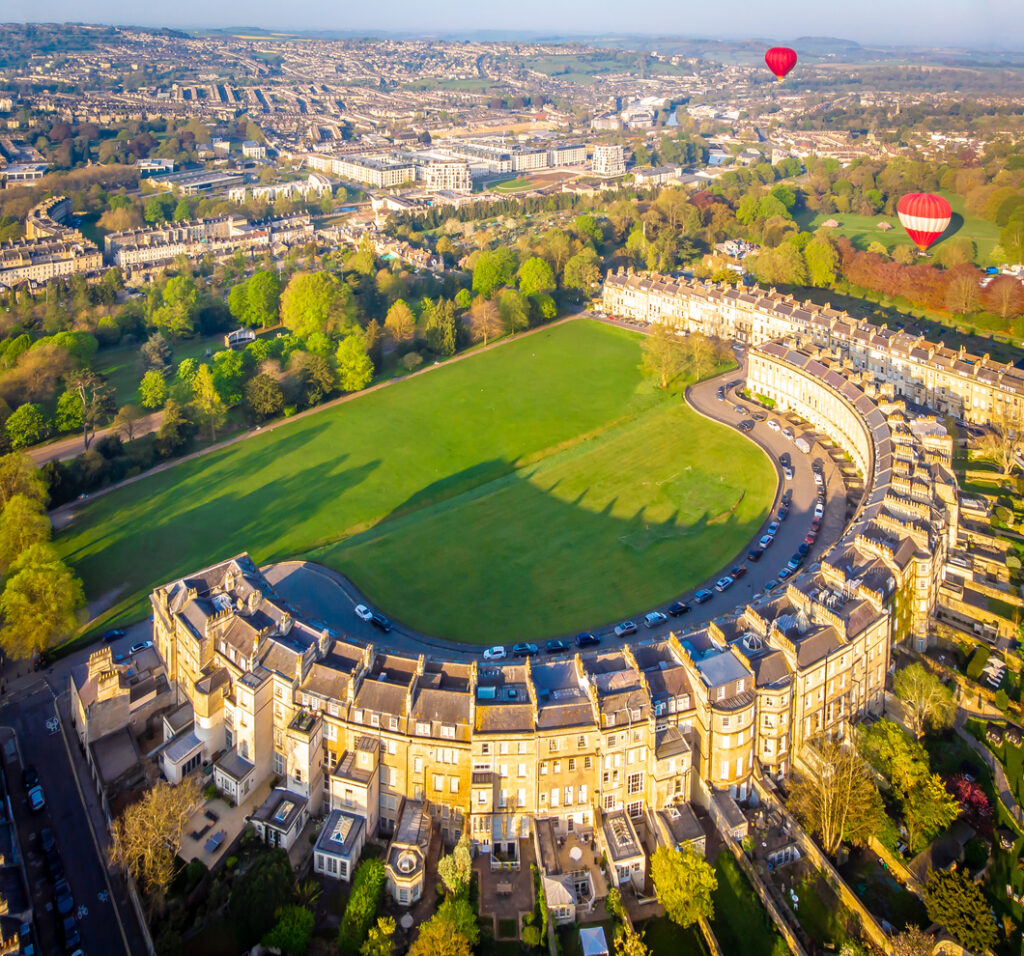
No.1 Royal Crescent appears as the exterior of the Featherington family’s London home. In the show, it’s opposite the Bridgerton family home, but in reality, the Bridgertons’ house is Ranger’s House in Greenwich, around 115 miles from Bath!You can see the exterior for free from the Royal Crescent lawn.
But No.1 Royal Crescent is also a museum, so you can go inside and see how a wealthy Bath household may have looked during the late 18th century. Its furnished rooms include the parlour, dining room, withdrawing room, bedrooms, kitchen and servants’ quarters.
It’s a interesting, semi-linked to Bridgerton experience that’s worth doing in the city!
No.1 sits at the eastern end of the Royal Crescent, approximately 20 minutes on foot from Bath Spa railway station. Admission charges and opening hours vary throughout the year, so check the museum website before travelling.
The Royal Crescent
The Royal Crescent (which No. 1 Royal Crescent is a part of) is one of the most recognisable streets in Bath (and a must-see in the city)! It appears in exterior scenes throughout Bridgerton. Its 30 Grade I-listed terraced houses curve around a large lawn overlooking Royal Victoria Park.
John Wood the Younger designed the crescent, which was built between 1767 and 1775. Although each house behind the façade differs in size and layout, the front was designed as one continuous structure.
The Royal Crescent appears during carriage journeys and scenes showing members of the Ton travelling between homes and social engagements.
These days, much of the crescent is part of the Royal Crescent Hotel. It’s not a cheap place to stay in Bath, but if you want to really feel the Bridgerton vibes, take a look at it here!
I did also stay in the Queensberry Hotel on a trip to Bath; this is set in a terraced townhouse and definitely has Bridgerton vibes.
The Holburne Museum
The Holburne Museum plays Lady Danbury’s house, but, as the name suggests, it’s actually am museum!
You’ll find it at the eastern end of Great Pulteney Street.
This long, broad street gives you a clear view of the building from several hundred metres away.
The building opened as the Sydney Hotel in the late 18th century, serving visitors to the adjoining Sydney Gardens.
It later became an art museum housing the collection of Sir William Holburne. Its galleries now contain paintings, silverware, porcelain, furniture and other decorative art, alongside temporary exhibitions.
The interiors used for Lady Danbury’s home were largely filmed elsewhere – but the museum has leaned into its Bridgerton connection. An audio tour voiced by Adjoa Andoh, who plays Lady Danbury, was introduced in 2025.
You can photograph the exterior and walk through Sydney Gardens without paying admission. Entry to the permanent collection is generally free, although charges apply to some temporary exhibitions. The museum currently opens from 10:00 am from Monday to Saturday and 11:00 am on Sundays and bank holidays, but you should confirm the latest opening hours before visiting.
Abbey Green and the Abbey Deli
The Abbey Deli in Abbey Green became the Modiste, the dress shop operated by Madame Delacroix. Its curved, double-fronted windows were dressed with fabrics, feathers and clothing to turn the café into one of the Ton’s most fashionable businesses!
Both exterior and interior scenes were filmed here during the first two seasons. The shop is closely connected to Penelope Featherington’s story, as Madame Delacroix eventually learns that Penelope is responsible for publishing Lady Whistledown’s scandal sheets.
The building operates as a café when cameras aren’t rolling. You can stop for lunch, cake or afternoon tea and see parts of the interior used during production.
Abbey Green is less than five minutes on foot from Bath Spa railway station. It becomes busy during weekends and summer afternoons, particularly when walking tours arrive – so visit before 10:00 am if you want a clearer photograph of the Modiste exterior.
Bath Assembly Rooms
Bath Assembly Rooms was the setting for several of Bridgerton’s high-society balls. Its Ball Room and Tea Room gave the production the high ceilings, chandeliers and large floors needed for scenes involving dancing, orchestras and dozens of costumed extras!
The original Assembly Rooms opened in 1771. During Georgian Bath’s social season, visitors came here to dance, play cards, drink tea and meet other members of society; it was all very Bridgerton!
The Assembly Rooms are currently closed while the National Trust develops a new visitor experience. They are expected to reopen in 2027, although you should check the National Trust’s Assembly Rooms page for confirmed dates and any tours available during the work.
Bath Guildhall
The Guildhall’s Banqueting Room also appears during some of Bridgerton’s formal ball scenes, including the Rambury Ball.
The room has gilded decoration, large historical paintings, chandeliers and a high ceiling, allowing it to stand in for a venue attended by London’s wealthiest families!
Bath Guildhall was built in the late 18th century and remains an active civic building. Its central location beside Bath’s covered market makes it easy to pass during a sightseeing route, although access to its interior is more limited than at a museum.
The Banqueting Room is used for weddings, ceremonies, dinners and private functions; it’s not usually open to the public, but keep an eye out for Bridgerton-themed balls being held here!
Beauford Square and Trim Street
Beauford Square appears in several Bridgerton street scenes, including the iconic scene when Penelope and Eloise were discussing how Marina could be pregnant when she was unmarried. The square was built in the 18th century and consists of two-storey houses arranged around a small central lawn enclosed by iron railings.
Its southern side includes the original frontage of the Theatre Royal Bath, although later additions have changed parts of the surrounding area. Trim Street, around the corner from Beauford Square, was also used during filming; most notably as the setting for Gunter’s Tea Shop, where Daphne and Simon meet. In real life, it’s a hairdressing salon called “12 Trim Street”.
Tips for visiting Bridgerton locations in Bath
Bath is a very popular tourist destination for both domestic and international tourists, so here are a few things to bear in mind!
If you’re travelling from overseas, arrange mobile data before beginning your walk. Public Wi-Fi isn’t available at every filming location – so having the best eSIM for UK can give you quick access to digital museum tickets, train bookings, maps and current opening information.
Book paid attractions online where possible. No.1 Royal Crescent, the Holburne Museum’s temporary exhibitions and other Bath attractions can become busy during weekends, school holidays and the Christmas market. Advance tickets may also give you a timed entry slot, helping you plan the rest of your route.
Check every attraction’s official website shortly before travelling. The Bath Assembly Rooms are closed for major work and are expected to reopen in 2027, while the Guildhall isn’t always visitable. We’re hopeful that there will be many more seasons of Bridgerton, and filming can also result in temporary road closures with little relevance to regular museum schedules.
Bath is easy to reach by train. Direct services connect Bath Spa with London Paddington, Bristol, Cardiff and other cities – the journey to Bristol Temple Meads is only 15-20 minutes and there are also more connections there. The journey from London takes approximately 80 minutes on the fastest services.
Wear comfortable shoes because the locations cover several parts of the city. A direct walking route from Bath Spa station through Abbey Green, Bath Street, Beauford Square, the Assembly Rooms, Royal Crescent and the Holburne Museum covers several miles. Bath also has cobbled streets, uneven pavements and steep sections around the upper city.
Most exterior locations are free, so you don’t need to purchase a guided tour. However, a specialist Bridgerton walking tour can help you match individual scenes to streets that may look different without costumes, carriages and set dressing.