Why are there so many cliff falls in Cornwall?
The latest rock fall at Great Western Beach has triggered renewed warnings from the local authority for 2026.
A stretch of sand beneath the affected area has now been fenced off, with visitors urged to keep well clear of the base of the cliffs.
What happened during the Christmas rock fall
The most recent collapse occurred during the festive holidays in December 2025. A section of cliff face gave way, sending large amounts of rock and debris onto the sand below. No injuries were reported, but the scale of the fall prompted immediate action to restrict access to the affected part of the beach.
Temporary fencing was installed at the base of the cliff to prevent people sitting or walking directly underneath the unstable area.
Warning signs were also put in place, advising beach users to stay clear and respect the cordon for their own safety.
A pattern of repeated collapses at Great Western Beach
This incident is not isolated. The same stretch of cliff has experienced multiple rock falls in recent years. In September 2024, a chunk of cliff collapsed onto the beach, just weeks after another nearby fall had already raised concerns about stability.
Each incident has reduced the buffer between the cliff edge and the properties above, while increasing the area of beach considered unsafe during certain conditions.
Cornwall Council has confirmed it is aware of the latest collapse and is working with affected property owners.
The council owns the beach and had already installed fencing at the base of the cliff during summer 2024 following earlier falls.
Why cliff falls are common on Cornwall’s coastline

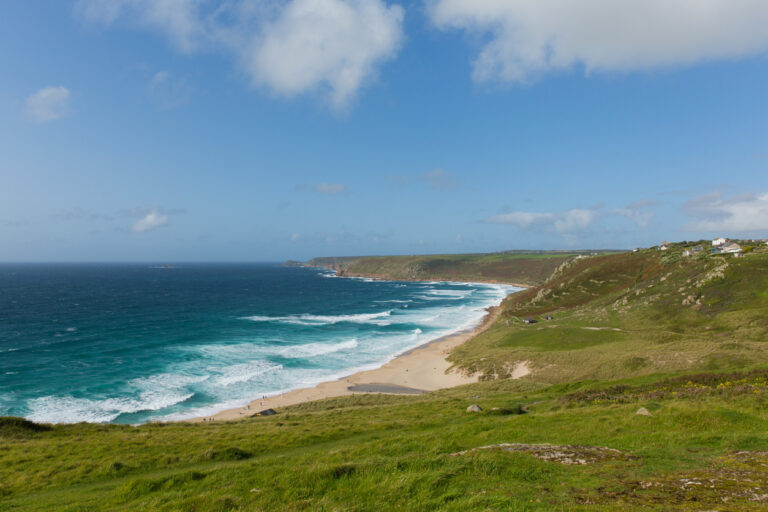
Cornwall’s cliffs are shaped by a combination of geology, weather and constant wave action. Many north coast cliffs consist of fractured rock layers that are vulnerable to erosion over time. Heavy rainfall can seep into cracks, increasing pressure within the cliff face and storm-driven waves undercut the base.
Crucially, collapses often occur without obvious warning!
A cliff may appear stable for months before a sudden failure, particularly after prolonged wet weather or stormy periods.
And even in calm conditions, the underlying structure may already be compromised.
Are cliff collapses becoming more frequent
Reports of cliff falls across Cornwall and the wider South West have become more common in recent years. This does not necessarily mean every cliff is becoming unsafe, but it does reflect a combination of increased monitoring and more frequent extreme weather events.
Storm systems bringing intense rainfall and powerful swells accelerate erosion, particularly during winter months. As coastlines retreat naturally, areas once considered safe can become higher risk within a relatively short timeframe.
What this means for visitors to Great Western Beach

For beachgoers, the immediate impact is reduced access to certain sections of sand.
Conditions can change quickly. A beach that appears safe one day may be partially closed the next, particularly after storms.
Visitors should expect temporary restrictions and follow on-site signage rather than relying on previous experience of the beach.
How to stay safe on cliff-backed beaches
Cliff falls are a known hazard on many Cornish beaches, not just in Newquay. Basic precautions reduce risk significantly:
- avoid sitting or placing towels directly beneath cliffs
- keep extra distance after heavy rain or storms
- be cautious at high tide, when escape routes along the sand are narrower
- respect fencing and warning signs without attempting to bypass them
- stay alert to changes in the cliff face, including fresh debris on the sand