Dartmoor’s enchanting rainforest that few know about
Dartmoor is one of the most evocative landscapes in Devon, if not in England.
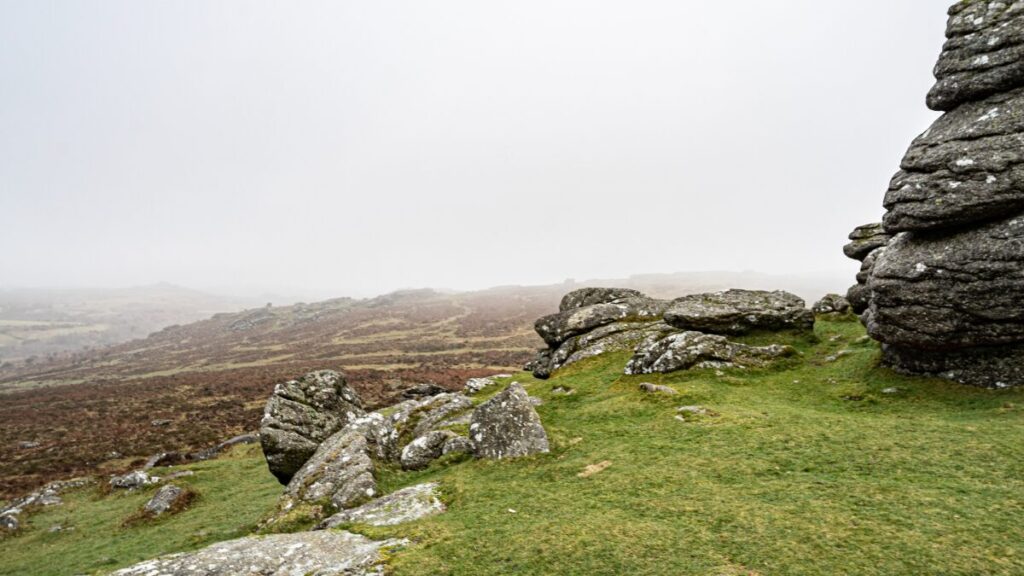
But when we imagine Dartmoor, we think of its high tors and of barren moors scoured by strong winds. We imagine a treeless landscape, where rocks and boulders, rather than birch and oaks, rise above ridgelines.
Millennia ago, however, Dartmoor was a very different place. It was once covered in vast forests, and indeed, the name ‘Dart’ derives from an old Celtic word for ‘oak trees’. Although much of Dartmoor’s tree cover was hacked down long ago, pockets of ancient woodland still hold out in places.
One such pocket of ancient woodland lies on the eastern edge of Dartmoor National Park. A few miles from Ashubruton, hidden away on rising banks above the River Dart, you’ll find Ausewell Woods.
Enter this protected woodland, and you’ll find a protective canopy of oak, ash and hazel, far removed from the open moorland Dartmoor’s known for. And it’s the perfect place for a woodland stroll.
An ancient woodland on the edge of Dartmoor National Park
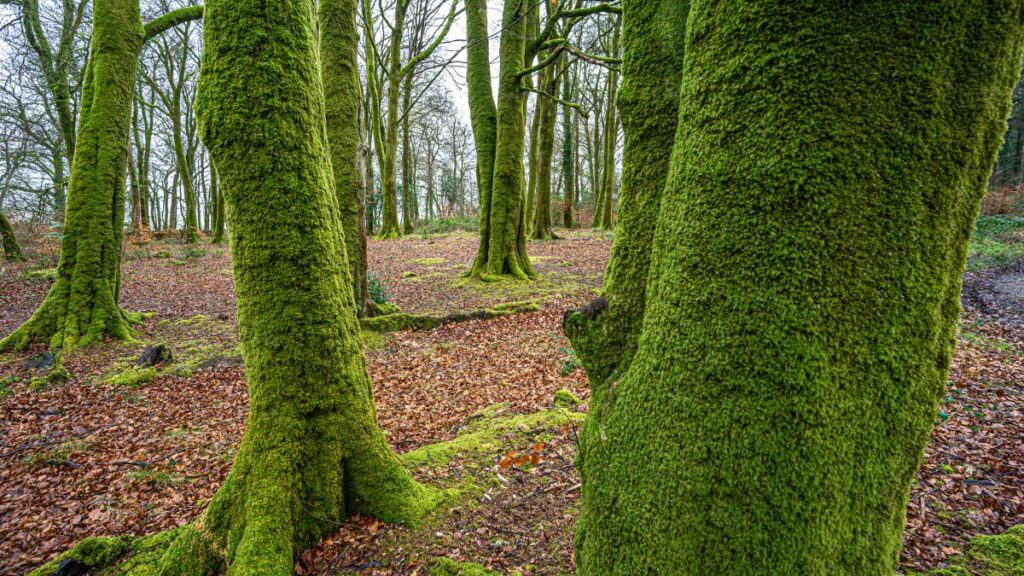
Ausewell Woods is an area of ancient, semi-natural woodland on the steep slopes of the River Dart. Covering some 342 acres, it’s jointly managed by the Woodland Trust and National Trust, while also forming part of a protected Site of Special Scientific Interest (SSSI).
Quite unlike the empty moorland that rises to the north, Ausewell Woods is home to temperate woodland dominated by a thickening canopy of broadleaf species, particularly oak and ash, with hazel forming the lower layers.
Although this is an ancient woodland, there’s also evidence of human use through the centuries. Walk through the trees, and you’ll find ancient rock cairns, the remnants of blast furnaces and copper mines, and non-native trees introduced over time.
At ground level, the woodland supports a range of plant life typical of long-established forests. Bluebells appear in spring, followed by ferns, mosses and shade-tolerant plants through the rest of the year. The damp conditions created by the valley and tree cover encourage this dense, almost mystical undergrowth.
Where is Ausewell Woods? And how do I get there?
A large part of Ausewell Wood’s appeal is its relative isolation from Dartmoor’s more popular tourist stops.
The woodland lies on the eastern edge of the National Park, roughly 1-2 miles north of Ashburton, and a few miles south of Buckland in the Moor. The woodland itself sits on the slopes above the River Dart, in a wooded valley that opens up into moorland.
The only way to reach Ausewell Woods is either by car or on foot. From Ashburton, you can follow fairly narrow country roads north towards Ausewell Cross, where you’ll find a small but dedicated car park at the entrance to the woodland. There’s space for approximately 6 cars, but there are no public facilities like toilets.
The nearest train stations are either Totnes or Newton Abbot.
The closest bus stop is only around a ten-minute walk from the car park, at Buckland Hall. This stop is on the route of the No. 672 bus from Newton Abbot, but services are rather infrequent.
It’s also possible to walk here from Ashburton (around 3 miles, or 1 hour’s walking) or Buckland in the Moor (1.5 miles, or around 30 minutes’ walking), if you’re up for a long hike.
Walking in Ausewell Woods
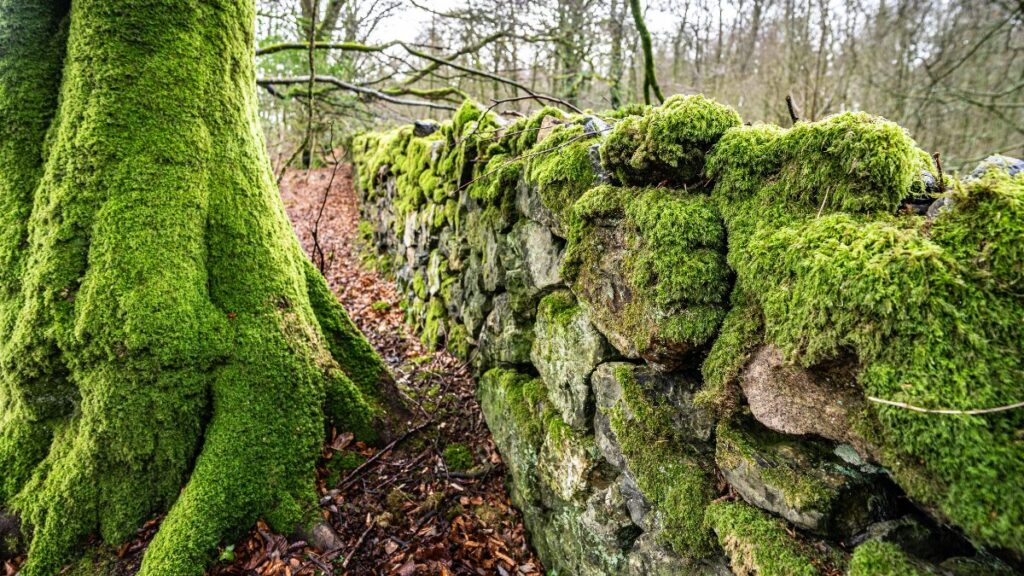
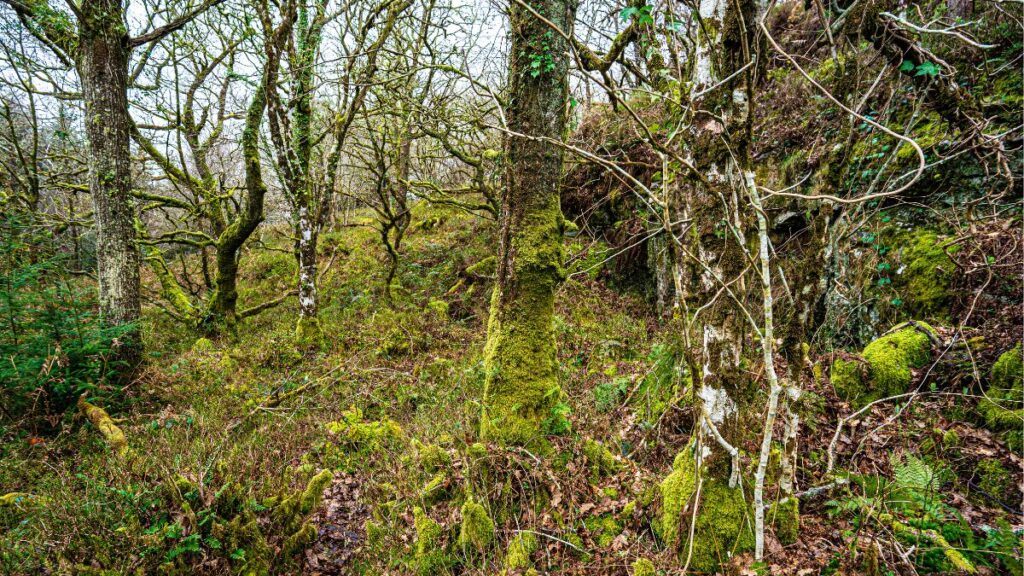
Ausewell Woods isn’t the most extensive woodland area in Devon, but that hardly matters. Amongst the dense hazel and oak trees, you’ll be enthralled by an almost otherworldly terrain glistening with moss and ferns.
The Woodland Trust describes Ausewell Woods as a ‘lost world’, and you’ll soon find yourself pleasantly lost as you navigate the thick undergrowth. Start at the small car park by the access road, and you’ll find woodland pathways weaving along the steep-sided slopes. You’ll hear the River Dart below, even if you can’t always see it, with fairly steep gradients lengthening the relatively short trails you’ll be walking.
It’s important that you stick to the defined trails, marked out in the woodland. At some points, you may come across areas that are cordoned off for conservation. Don’t cross into these areas. Ausewell Woods is a fragile ecosystem. It’s currently undergoing a long-term regeneration project, aiming to restore the woodland to its natural state after centuries of human use. Walking off piste can damage this work and potentially set the project back years.
How Ausewell Woods was almost lost
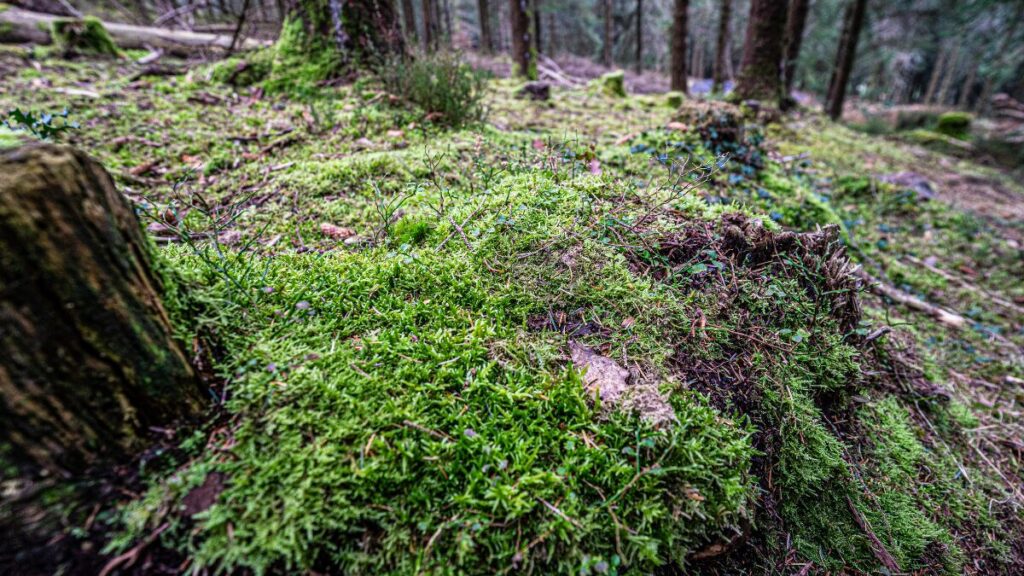
Ausewell Woods might be ‘ancient’, but that doesn’t mean untouched. In fact, it’s lucky to have clung on for so long. For millennia, humans have stripped Dartmoor’s forests to produce timber, firewood, and charcoal. Woodlands were cleared for grazing or crops and quarries were dug to mine copper and tin.
But Dartmoor’s farmers also managed rare woodland areas like this, through traditional practices such as coppicing and small-scale grazing, which created balanced ecosystems. By the 19th and 20th centuries, many of these traditional practices declined.
As coppicing fell out of use and rural economies changed, sections of woodland became neglected or were altered for different uses. Without active management, the ecological balance shifted. Dense growth reduced biodiversity in some areas, while invasive species and tree disease began to take hold.
In parts of Devon, this broader decline prompted conservation responses. Organisations such as the Woodland Trust and the National Trust have played a vital role in protecting and restoring ancient woodland.
The two trusts combined forces to purchase Ausewell Woods after a successful fundraising campaign that raised £1million. They’ve since embarked on a long-term regeneration project to restore the woods to their ancient glory.
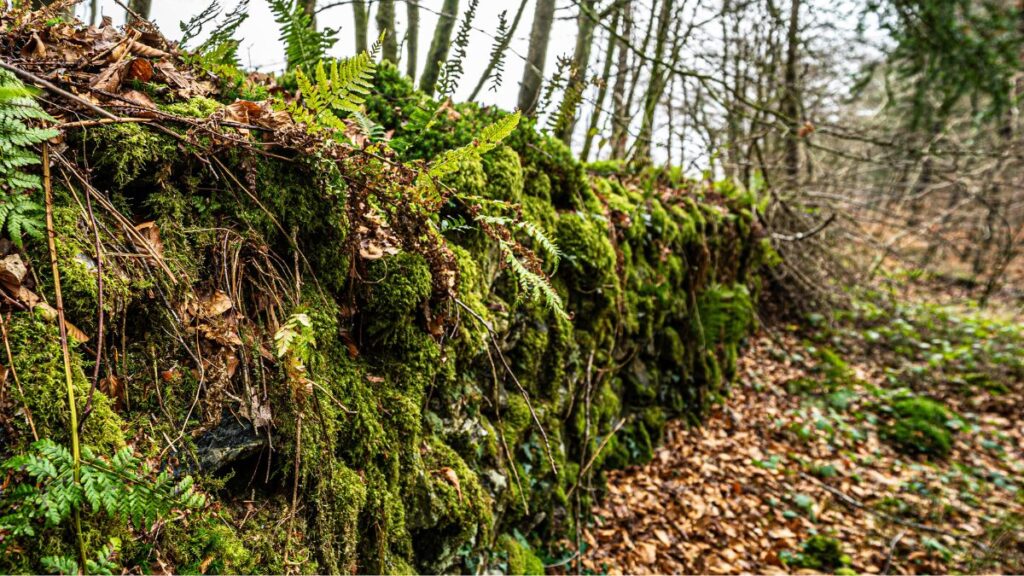
This recovery process has involved a mix of approaches, such as allowing natural regeneration in some sections while reintroducing elements of active management in others. Footpaths have been stabilised, invasive species controlled, and native woodland encouraged to recover.
What you see today, when walking through Ausewell Woods, is a combination of ancient woodland, human management, mismanagement, and conservation. You’ll also see the power of woodland regeneration, and enjoy a glimpse into the woodlands of old that once blanketed Dartmoor.
See my temperate rainforests guide here, or my list of the best things to do in Dartmoor here.