How GWR once CHANGED the West Country’s time zones!
The clocks have gone back an hour this morning (Sunday 25 October), marking the end of British Summer Time. But did you know that, nearly 200 years ago, the Great Western Railway was responsible for changing the time in the West Country?
Before the railways arrived, Bristol was around 10 minutes behind London. Exeter was 14 minutes behind, and towns across the country followed their own local clocks. Then, in 1840, the Great Western Railway (GWR) decided that its stations should all run on London time.
Why did different towns in Britain have different times?
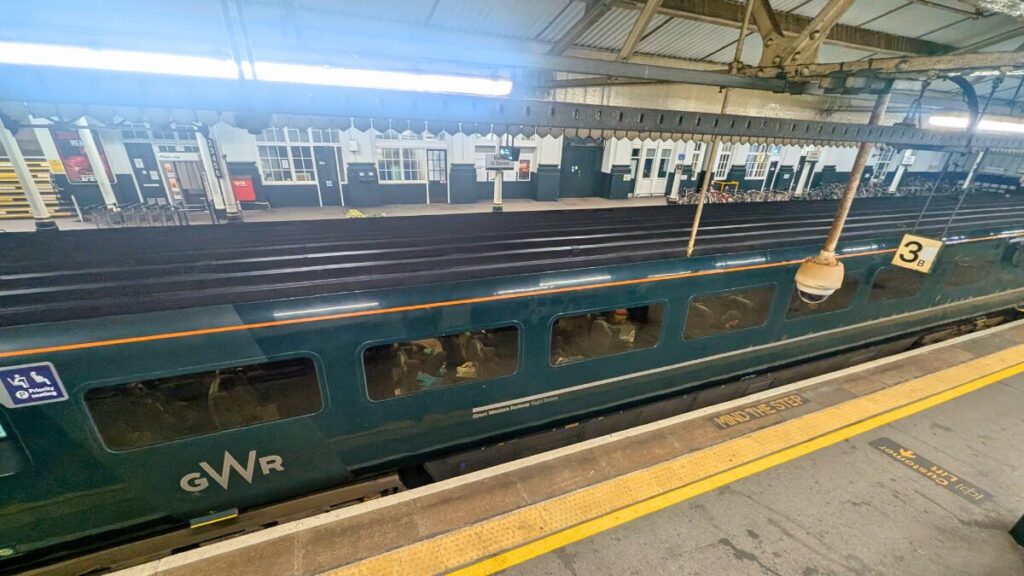
Today, when you board a train in London, you might find it takes way longer than you think (thanks to UK train delays!), but you’ll still be on the same time zone!
But before the 19th century, that wasn’t the case.
For centuries, towns and cities across Britain generally worked out their own local time using the position of the sun – when the sun reached its highest point in the sky, it was noon. And even though we’re a small country, it still reached the highest point in the sky at different times!
This meant that London, Bristol, Exeter and Plymouth all had slightly different local times.
Bristol, which lies west of Greenwich, was approximately 10 minutes behind Greenwich Mean Time. Exeter was around 14 minutes behind, while Plymouth was approximately 16 minutes behind.
For most people, this wasn’t an issue, as they were travelling between towns by horse and carriage, which was much slower.
But the arrival of railways meant that people could travel between towns and cities much more quickly, and railway companies needed to coordinate trains across increasingly complicated networks!
This meant that a train that left Bristol at midday London time would actually depart at around 11:49am, according to Bristol’s local clocks! This was the biggest problem for GWR out of all the railways, because it’s the main railway that goes east to west rather than north to south.
The solution was to introduce one standard time across the railway network.
How the Great Western Railway changed Britain’s clocks in 1840
In November 1840, the Great Western Railway became the first British railway company to adopt a standard time across its network.
Rather than using the local time of each town, its trains and stations followed London time, based on Greenwich.
The GWR timetable published in January 1841 told passengers that London time was:
- Four minutes ahead of Reading.
- Eight minutes ahead of Chippenham.
- Eleven minutes ahead of Bath and Bristol.
- Fourteen minutes ahead of Exeter.
By the late 1840s, trains were reaching Exeter and Plymouth, where the differences from London time were even greater.

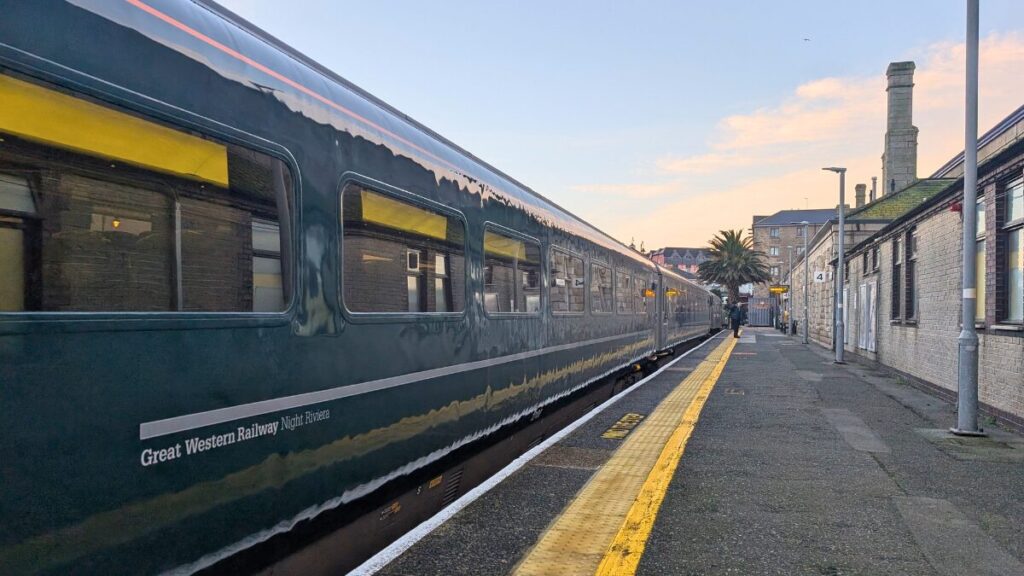
Taking the night train to Cornwall, going across many time zones!
Why does Bristol’s Corn Exchange clock have two minute hands?
One of the most unusual reminders of Britain’s old timekeeping system can still be found in central Bristol.
Head to the Corn Exchange on Corn Street, close to St Nicholas Market, and look up at the clock above the building’s entrance. At first glance, it resembles an ordinary clock with Roman numerals.
But take a closer look, and you’ll notice it has two minute hands.
The clock was originally installed in 1822, before the Great Western Railway arrived in Bristol. When the railways began using London time, an additional minute hand was added so that people could see both Bristol’s local time and railway time on the same clock face.
When did the rest of Britain adopt railway time?
Although the Great Western Railway started using London time in 1840, it took years for the rest of Britain to catch up. Other railway companies soon followed, but some towns continued using their own local time.
By 1847, most British railways were using the same time- but it wasn’t until 1880 that Greenwich Mean Time became the legal standard across Great Britain.
The system we use today, where the clocks go forward in spring and back in autumn, came much later, in 1916. This morning (25 October 2026), our clocks went back an hour, and they’ll go forward again on 28 March 2027.